
Upcoming Events
*
Upcoming Events *
Upcoming events.
Please contact us at alconpb@gmail.com if you have any conservation related events you would like to add to the calendar.
International Whale Shark Day
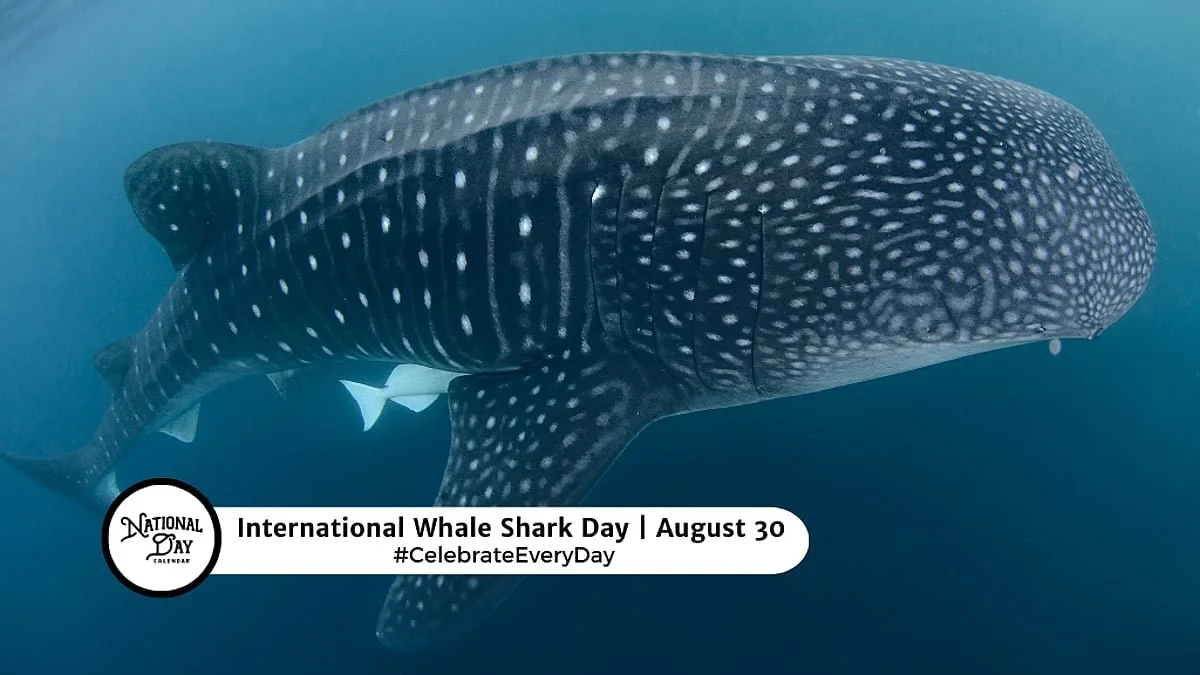
International Whale Shark Day on August 30 aims to increase awareness about a magnificent sea-dwelling creature. The whale shark's declining numbers alerts us to their need for protection and conservation. These gentle giants fascinate marine biologists and aquatic enthusiasts alike. Click here for more information.

Earth Overshoot Day
Earth Overshoot Day falls on a different day each year, and in 2026 it falls on July 30. This date marks the point in the year when humanity's demand for ecological resources and services exceeds what Earth's ecosystems can regenerate over the entire year.
Currently, humanity is using nature 73% faster than Earth can renew, which is equivalent to consuming the resources of about 1.73 Earths.
Key Ecological Details
Calculation & Accounts: The date is calculated by the Global Footprint Network and York University using the National Footprint and Biocapacity Accounts.
Historical Context: While the 2026 date technically falls six days later than the previous year, this shift is largely due to data revisions. Despite appearing later, 2026 represents the highest level of global ecological overshoot in human history.
Accumulated Debt: Because global overshoot began in the early 1970s, humanity has built up a massive ecological deficit that manifests in resource scarcity and climate disruption.

World Nature Conservation Day
World Nature Conservation Day is observed globally on July 28. It is dedicated to raising awareness about the urgent need to protect natural resources, preserve biodiversity, and adopt sustainable habits to combat climate change and environmental degradation.
Why It Matters
A healthy environment is the foundation for a stable society. With challenges like habitat loss, pollution, and climate change affecting ecosystems worldwide, this day emphasizes that everyone plays a critical role in safeguarding natural resources—like water, air, and soil—for future generations.
Actionable Ways to Participate
You can make an impact in your community and daily life through several simple, practical steps:
Reduce, Reuse, and Recycle: Minimize household waste by avoiding single-use plastics and recycling whenever possible.
Conserve Resources: Lower your energy and water consumption by taking shorter showers, turning off unused appliances, and fixing leaks.
Volunteer Locally: Support local conservation projects, beach or neighborhood cleanups, and community gardens.
Educate and Advocate: Spread awareness on the importance of sustainability and share actionable tips with your friends and family.
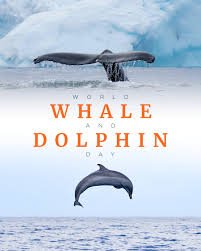
World Whale and Dolphin Day
23 July is World Whale and Dolphin Day, which raises awareness about the issues facing these marine mammals. Whales are crucial for maintaining a healthy ocean and combating climate change, as they help remove carbon dioxide from the atmosphere. There are other days dedicated to the protection of marine animals, such as World Whale Day on 19 February. Environmental organizations organize various events to defend these species, and in 2013, a demonstration promoting the closure of all dolphinariums took place in the European Union.
Whales and dolphins have become popular among the public due to their unique characteristics and intelligence. Orcas, for example, can live up to 30-60 years in the wild and 10-30 years in captivity. Dolphins, known as one of the smartest animals on the planet, have even been able to communicate and heal certain diseases in humans. It is important to learn more about these amazing creatures and how to contribute to their survival.
History and Significance
The holiday was established in 1986, coinciding with the day the International Whaling Commission enacted a ban on commercial whaling after decades of over-hunting. While the ban helped many whale populations recover from the brink of extinction, marine mammals face an array of modern challenges. World Whale and Dolphin Day serves as a global reminder to advocate for marine conservation, sustainable tourism, and cleaner oceans.
Threats to Marine Mammals
Despite past victories, whales and dolphins remain highly vulnerable to human activities in our oceans. Primary threats include:
Entanglement: Accidental trapping in commercial fishing gear and nets.
Vessel Strikes: Collisions with ships and large maritime vessels.
Habitat Degradation: Chemical pollution and marine debris in the water.
Ocean Noise: Human-made underwater noise that disrupts whale and dolphin communication.
Captivity: The capturing of wild whales and dolphins for circuses, theme parks, and marine aquariums.
How You Can Get Involved
Since Texas waters and the greater Gulf of Mexico are home to unique and vulnerable marine life (such as the endangered Rice's whale), there are several ways you can take action: [1]
Report Sightings or Strandings: If you spot an injured or stranded marine mammal on the beach, report it to Profepa (see below)
Support Conservation: Donate or volunteer with ocean advocacy groups like the Ocean Conservancy.
Reduce Plastic Use: Limit your single-use plastics to prevent harmful debris from reaching the ocean.
Reporting local dead, injured or stranded marine mammals
Report dead, injured, or stranded whales and dolphins to the Federal Attorney for Environmental Protection (PROFEPA), which coordinates the local Marine Mammal Stranding Network with universities like UABC.
Keep your distance and notify the authorities immediately through the following channels:
Local Emergency Line: Dial 911 to trigger an immediate dispatch.
PROFEPA Contact: Contact the Ensenada or Baja California regional offices (find details on the Gob.mx PROFEPA Site). Or (646) 176 5000 or (646) 172 4099
RABEN (Entangled Whales): For whales tangled in fishing gear, contact the Whale Entangled Response Network directly via WhatsApp at +52 322-150-0850.
Port Authority: Contact the local Capitanía de Puerto or local Civil Protection (Protección Civil).
What to do while waiting:
Do not touch or push the animal back into the water.
Keep a safe distance (at least 240 meters for whales, 50 meters for dolphins).
Take photos/videos of the animal’s tail, dorsal fin, and any injuries to help the rescue team identify the species.

World Snake Day
World Snake Day is celebrated globally on July 16th. It is dedicated to raising awareness about the thousands of snake species on the planet, dispelling common myths, and highlighting their vital role in local and global ecosystems.
Why Snakes Matter
Snakes play an irreplaceable role in keeping environments healthy and balanced:
Natural Pest Control: Snakes keep rodent and insect populations in check, which helps protect agricultural crops and limits the spread of diseases (like Lyme disease).
Ecological Balance: They serve as vital prey for various birds of prey and mammals.
Medical Benefits: Compounds found in certain snake venoms are heavily studied and utilized in modern medicine to treat heart conditions and high blood pressure.
Common Misconceptions
They aren't all dangerous: Of the roughly 3,500 species of snakes worldwide, only about 600 are venomous, and merely 200 pose a significant risk to humans.
They avoid humans: Snakes are naturally reclusive and generally only bite out of self-defense when they are threatened, cornered, or accidentally stepped on.
How to Observe
Learn about local species: Research the native snakes in your area to understand what lives in your ecosystem. Read our July species-of-the-month about our local rattlesnake!
Refuse illegal wildlife products: Avoid sharing or liking posts that promote the illegal exotic pet trade or cruel animal videos.
Support conservation: Check out conservation organizations like Save The Snakes or World Animal Protection to learn how to peacefully coexist with these reptiles.

Science for the People Monthly Trash Pick Up and Analysis (Copy)
For the past nine years locals have gathered together at Mar Azul to protect the near-shore environment!
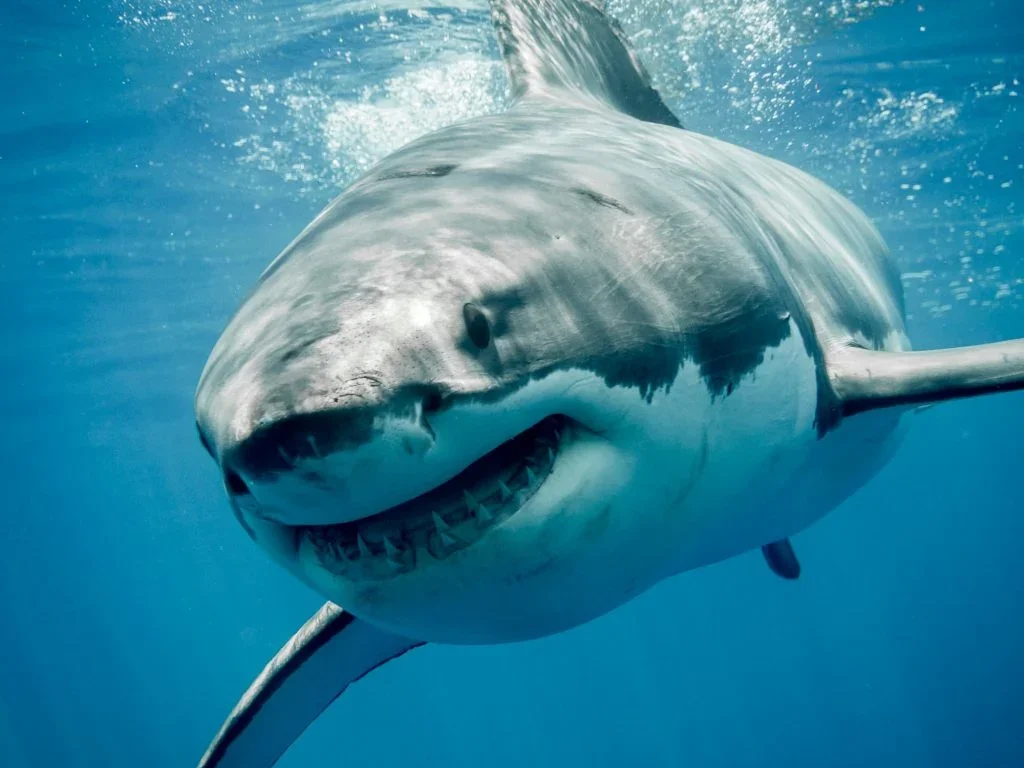
World Shark Day
About World Shark Day 2026
World Shark Day is observed every year on July 14th to celebrate one of the ocean’s most iconic and misunderstood creatures. This global awareness day seeks to promote shark conservation, challenge negative stereotypes, and raise awareness about the vital role sharks play in maintaining healthy marine ecosystems. As apex predators, sharks are essential to ocean balance – yet millions are killed every year due to overfishing, habitat loss, and harmful myths.
Why World Shark Day matters
Sharks have been swimming the oceans for over 400 million years, but today they face a growing threat from human activity. Over 100 million sharks are killed annually, largely for their fins, meat, and liver oil. Many species are now critically endangered. Despite their fearsome reputation, sharks are essential to the ocean’s food chain, keeping populations in balance and ensuring the health of coral reefs and seagrass beds. World Shark Day reminds us that preserving sharks is not only a matter of biodiversity but of planetary survival.
How to get involved in World Shark Day
Learn about different shark species and their roles in marine ecosystems.
Watch documentaries or read books that challenge shark myths and explore their true behaviour.
Support shark conservation groups through donations or volunteer work.
Refuse to support restaurants or retailers that trade in shark fins or related products.
Share facts, videos, and positive messages about sharks on social media using official hashtags.
Organise school or community discussions around marine conservation.

World Population Day
World Population Day is an annual United Nations observance held on July 11 to raise awareness about critical global demographic issues. It highlights challenges ranging from family planning, gender equality, and maternal health to human rights and poverty alleviation.
History and Origin
Day of Five Billion: The event was inspired by the massive public interest in the global population reaching 5 billion people on July 11, 1987. [1, 2]
Establishment: It was officially established in 1989 by the Governing Council of the United Nations Development Programme (UNDP) and first observed on July 11, 1990. [1, 2]
General Assembly: By Resolution 45/216 in December 1990, the UN General Assembly decided to continue the annual observance. [1]
Current Statistics
Global Milestone: The world’s population officially surpassed the 8 billion milestone in late 2022.
Growth Projections: According to UN and U.S. Census Bureau estimates, the population is projected to reach approximately 9 billion by the mid-2030s and peak at around 10 to 11 billion in the late 21st century. [1, 2, 3, 4]
How to Get Involved
You can find global statistics, demographic data, and information on organized campaigns to address human rights and reproductive health directly on the United Nations World Population Day portal.

Global Energy Independence Day
About Global Energy Independence Day
Global Energy Independence Day is an annual observance held on 10 July that champions the worldwide shift towards renewable and alternative energy sources. In 2026 it falls on Friday 10 July, a date chosen to coincide with the birthday of inventor Nikola Tesla, whose pioneering work on alternating current shaped the modern electricity supply. The day focuses on solar, wind, geothermal and other clean technologies, encouraging individuals, communities, businesses and governments to reduce their reliance on finite fossil fuels and to embrace a more sustainable energy future.
What is Global Energy Independence Day?
Global Energy Independence Day is a campaign that promotes the development and adoption of renewable and alternative energy across the planet. The central idea behind the day is energy independence: the ability of a household, region or nation to meet its power needs from clean, locally available, and renewable sources rather than imported or finite fuels such as coal, oil and natural gas.
The observance encourages people to think about where their electricity comes from and to consider the environmental cost of conventional power generation. It celebrates technologies that harness the natural world, including sunlight, wind, water, heat from beneath the earth’s surface and sustainable biofuels. By spotlighting these solutions, the day aims to accelerate the transition away from carbon-intensive energy and towards a cleaner, more resilient system.
It is also a tribute to innovation. Nikola Tesla devoted much of his life to imagining a world powered by abundant, freely available energy. Global Energy Independence Day carries that vision forward, reminding us that the breakthroughs of the past can inspire the clean-energy breakthroughs of the future.
How to Get Involved:
Carry out a simple energy audit of your home, identifying draughts, inefficient appliances and lighting that could be upgraded to reduce waste.
Explore whether rooftop solar panels, a heat pump or battery storage could work for your property, and look into available grants or incentives.
Reduce your everyday energy demand by switching off standby devices, using energy-efficient bulbs and being mindful of heating and cooling.
Learn about Nikola Tesla’s life and contribution to electricity, and share what you discover with friends, family or colleagues.
Use social media to raise awareness, share renewable-energy facts and encourage others to think about their own energy use.
Encourage your workplace, school or local council to set clean-energy targets and to report on their progress.
International Plastic Bag Free Day
International Plastic Bag Free Day is a global awareness campaign dedicated to eliminating single-use plastic bags and promoting sustainable alternatives to protect the environment and wildlife.
Here are a few quick facts and ways to participate:
Why It Matters
Lifespan vs. Use: The average plastic bag is used for just 12 minutes but can take anywhere from 100 to 500 years to decompose in a landfill or ocean.
Pollution Crisis: Roughly 5 trillion plastic bags are produced globally each year, with less than 3% successfully recycled.
Actionable Ways to Participate
Switch to Reusables: Commit to keeping foldable cloth or canvas bags in your car, backpack, or purse so you are never caught relying on a disposable store bag.
Local Beach & Park Cleanups: Participate in community-led initiatives in your area to physically remove plastic pollution from nature.
Learn More & Advocate: Explore resources from the Zero Waste Europe or track international events via International Plastic Bag Free Day calendars to stay up to date on policies and campaigns.
Science for the People Monthly Trash Pick Up and Analysis
For the past nine years locals have gathered together at Mar Azul to protect the near-shore environment!

Community Nature and Information Center. Help Build it!
Help the community build a visitor/nature center!
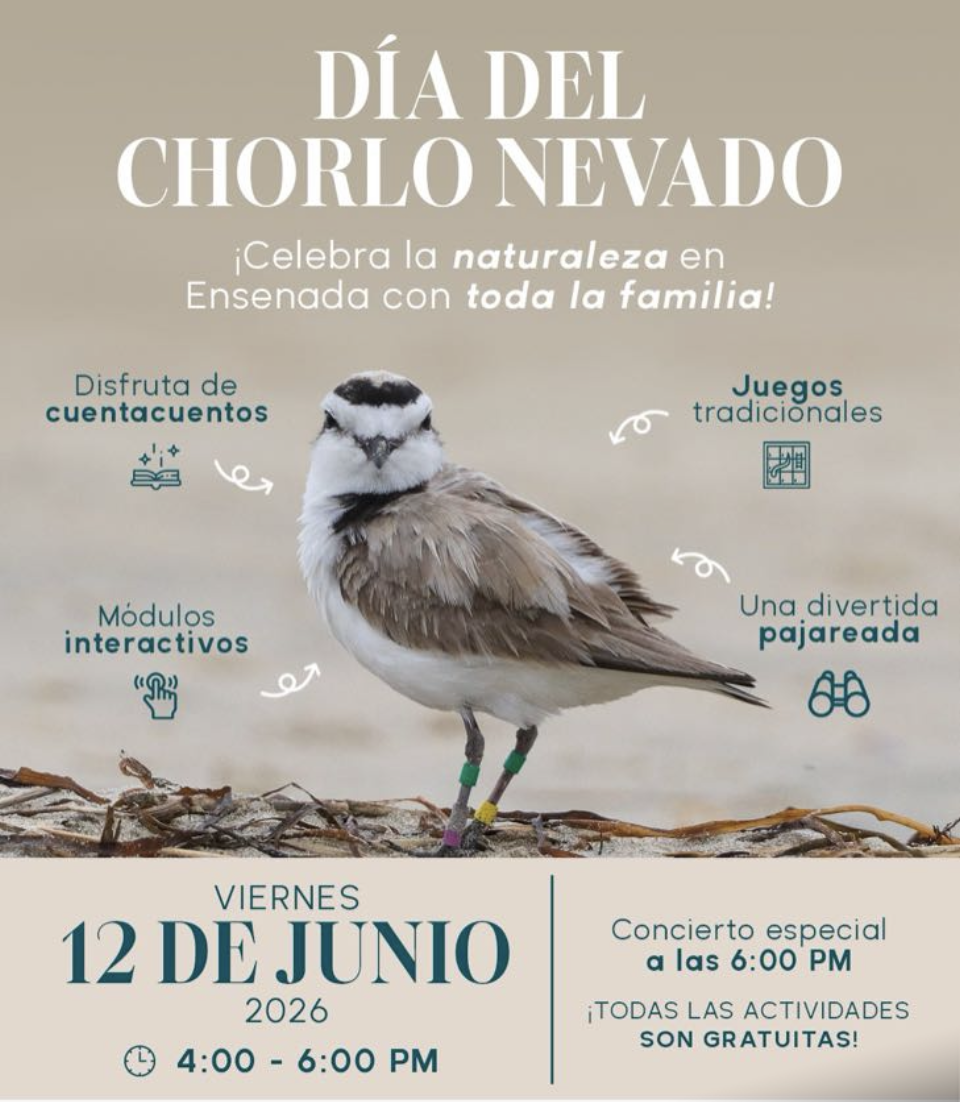

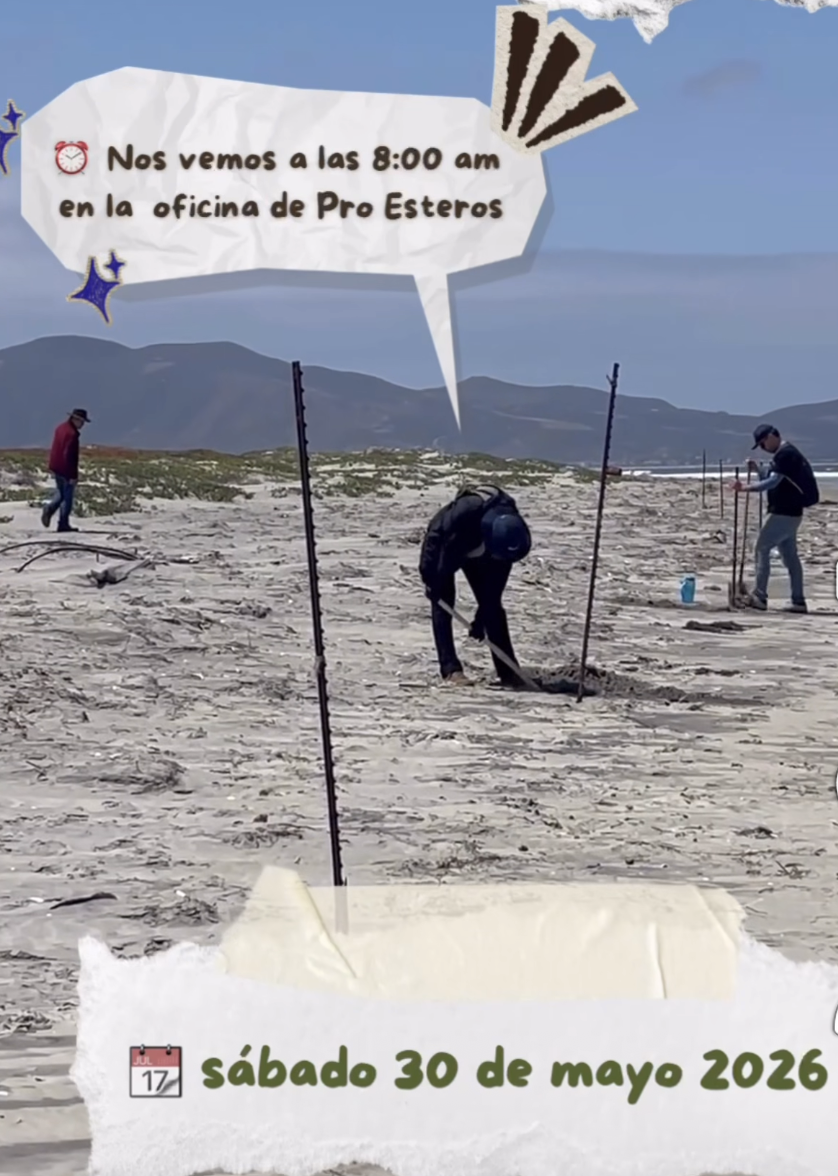
Welcome Home, Least Terns!
Come help Pro Esteros install protective fencing for the least tern breeding colony soon to arrive! Or just enjoy a beach walk and check it out.
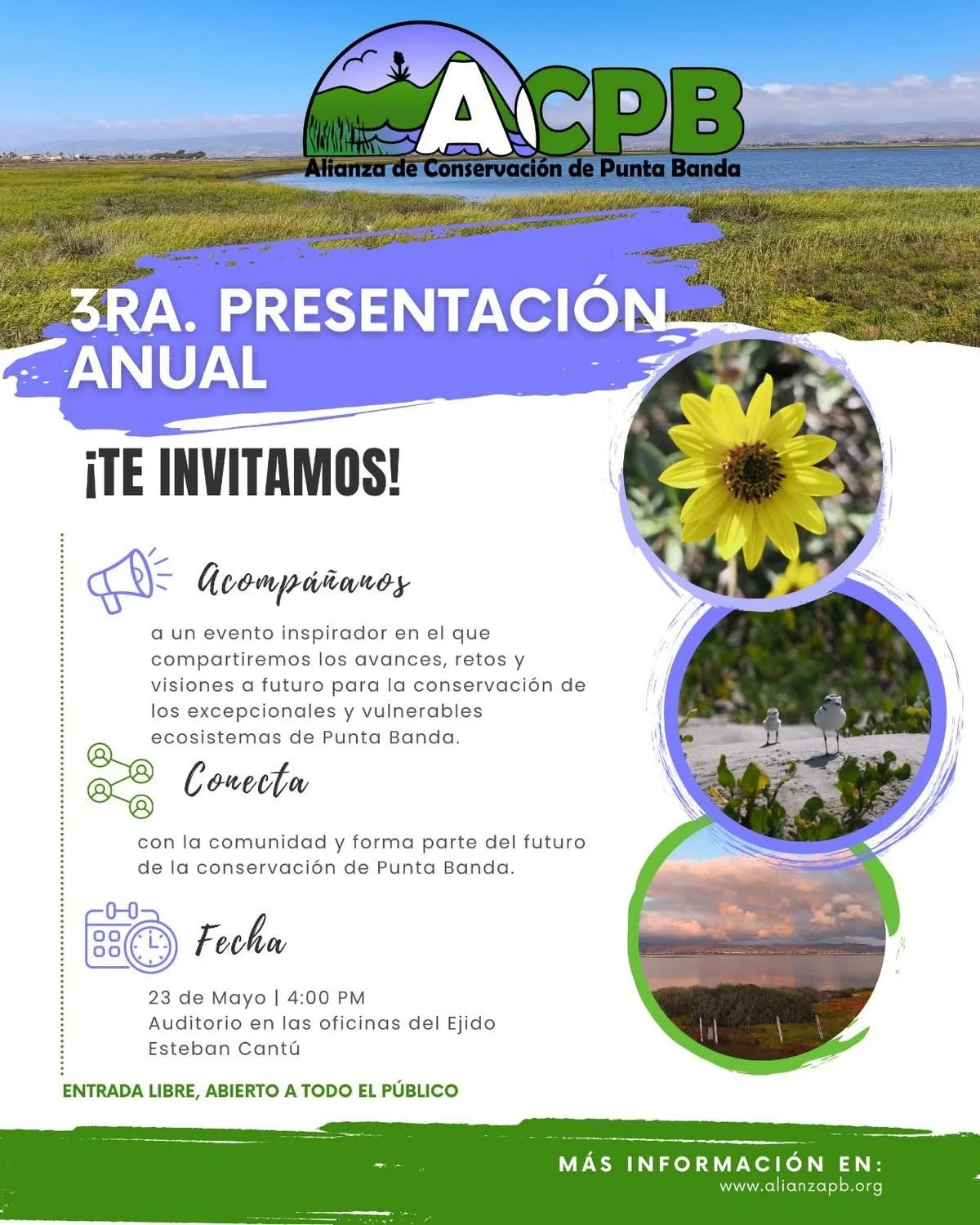
Presentacion Anual de Alianza de Conservacion de Punta Banda
Acompananos a un evento inspirador en el que compartiremos los avances, retos y visiones a futuro para la conservacion de los excepcionales y vulnerables ecosistemas de Punta Banda
4 pm, 23 de Mayo, Auditorio en las oficinas del Ejido Esteban Cantu
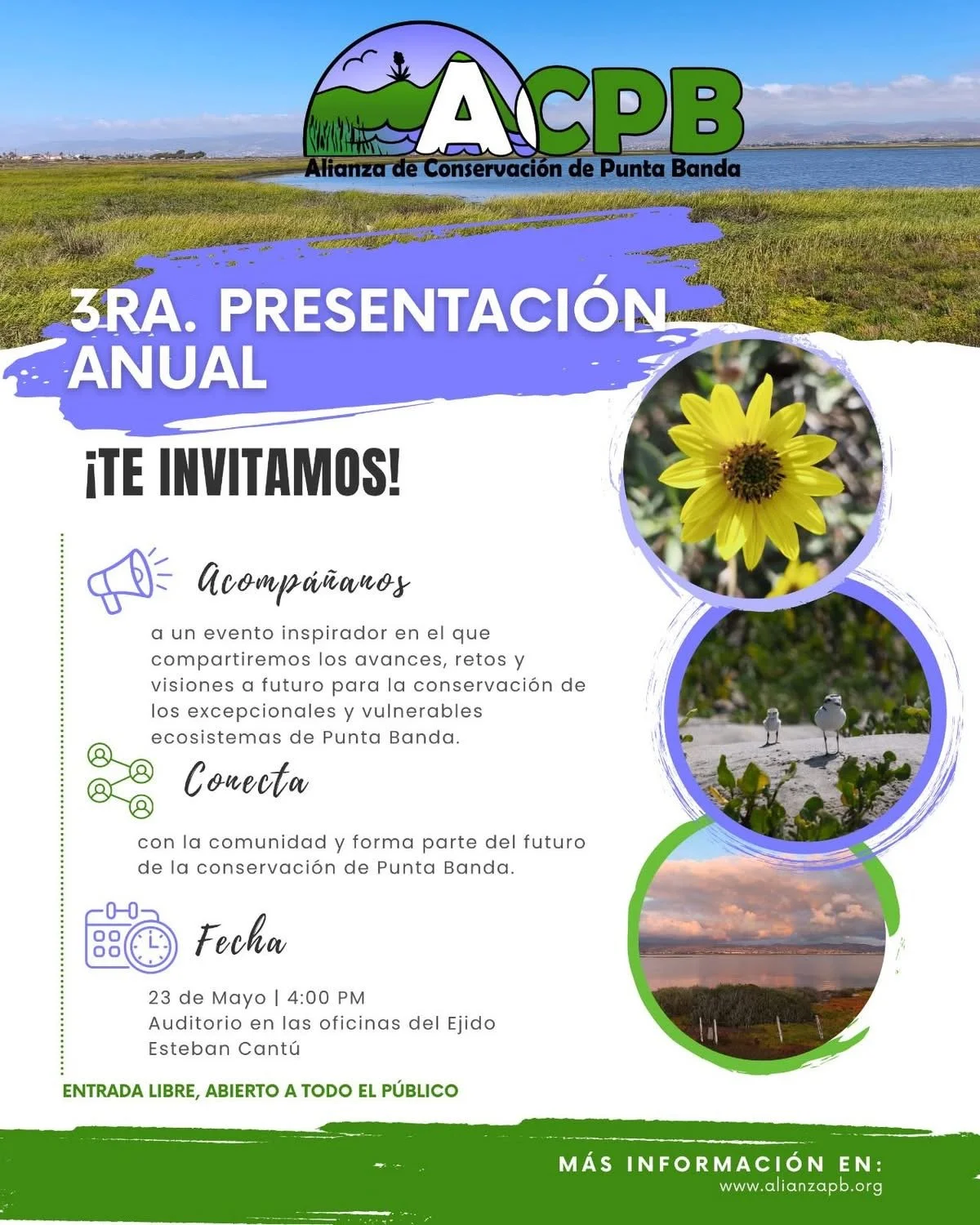
Science for the People Monthly Trash Pick Up and Analysis
For the past nine years locals have gathered together at Mar Azul to protect the near-shore environment!

Punta Banda Third Annual Presentation
Punta Banda Conservation Alliance will be presenting at the Gertrude Pearlman theater on the on May 5, 2025. We’ll be recapping our activities and accomplishments from the last 12 months, and filling you in on future activities planned, including community engagement. We have some exciting upcoming projects to announce! Additionally, we’ll be taking you on a visual tour of Punta Banda, highlighting its unique and vulnerable coastal habitats. Please put this on your calendar and join us!

I-Naturalist Challenge
Join the Punta Banda Conservation Alliance as we use I-Naturalist to find and document plant and animal species in the Punta Banda area.
Science for the People Monthly Trash Pick Up and Analysis
For the past nine years locals have gathered together at Mar Azul to protect the near-shore environment!
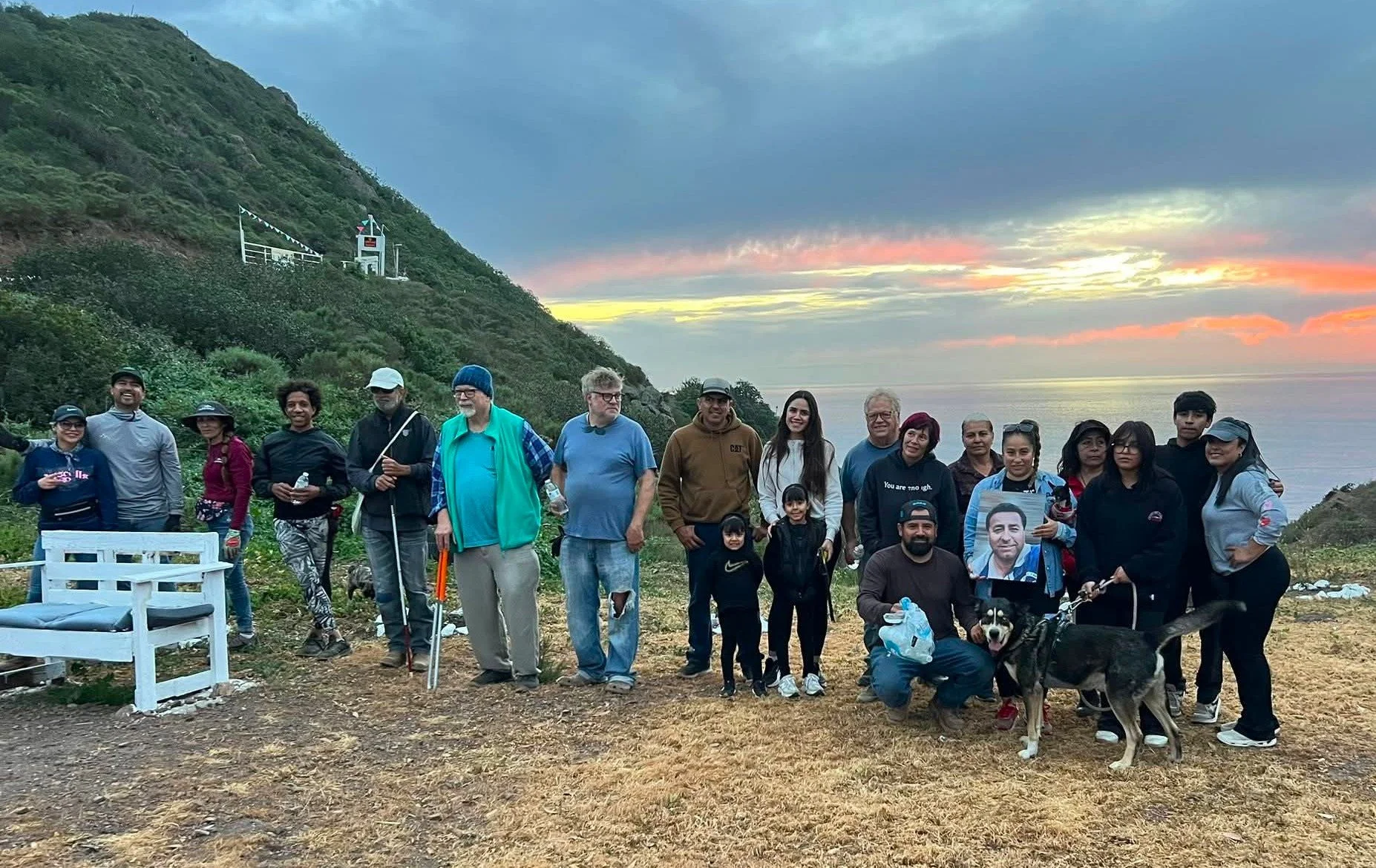
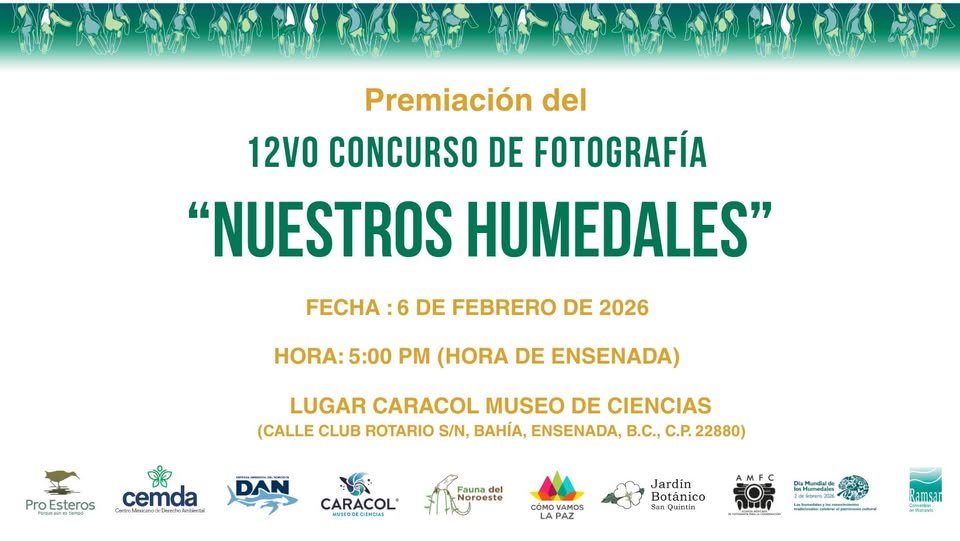
Photo Contest and Opening of Exhibit at Caracol Museum: “Our Wetlands”
Join Pro Esteros for photo contest awards ceremony and a photo exhibit of the wetlands of Baja California at the Caracol Museum in Ensenada. While you’re at it, check out all the wonderful science exhibits at the museum!
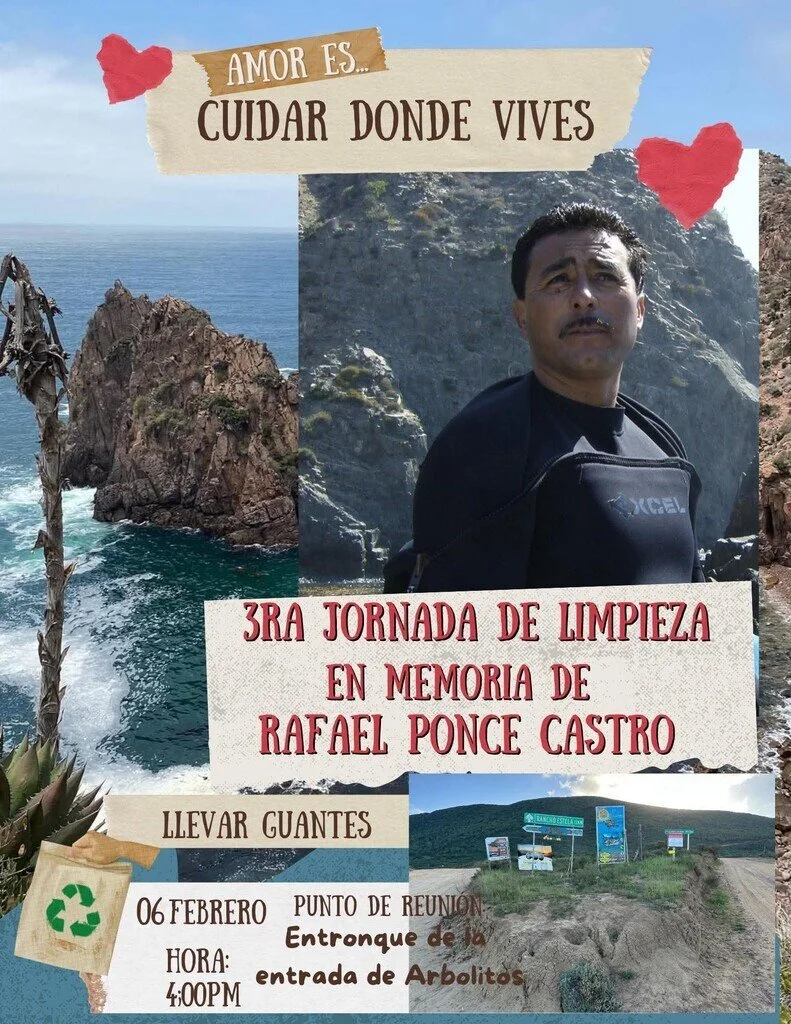
Clean-up in Memory of Rafael Ponce Castro
"Love is taking care of where you live". Clean-up honoring the legacy of Rafael Ponce Castro, organized by Dulce Karina Ponce in memory of her father.

Punta Banda Birding Club
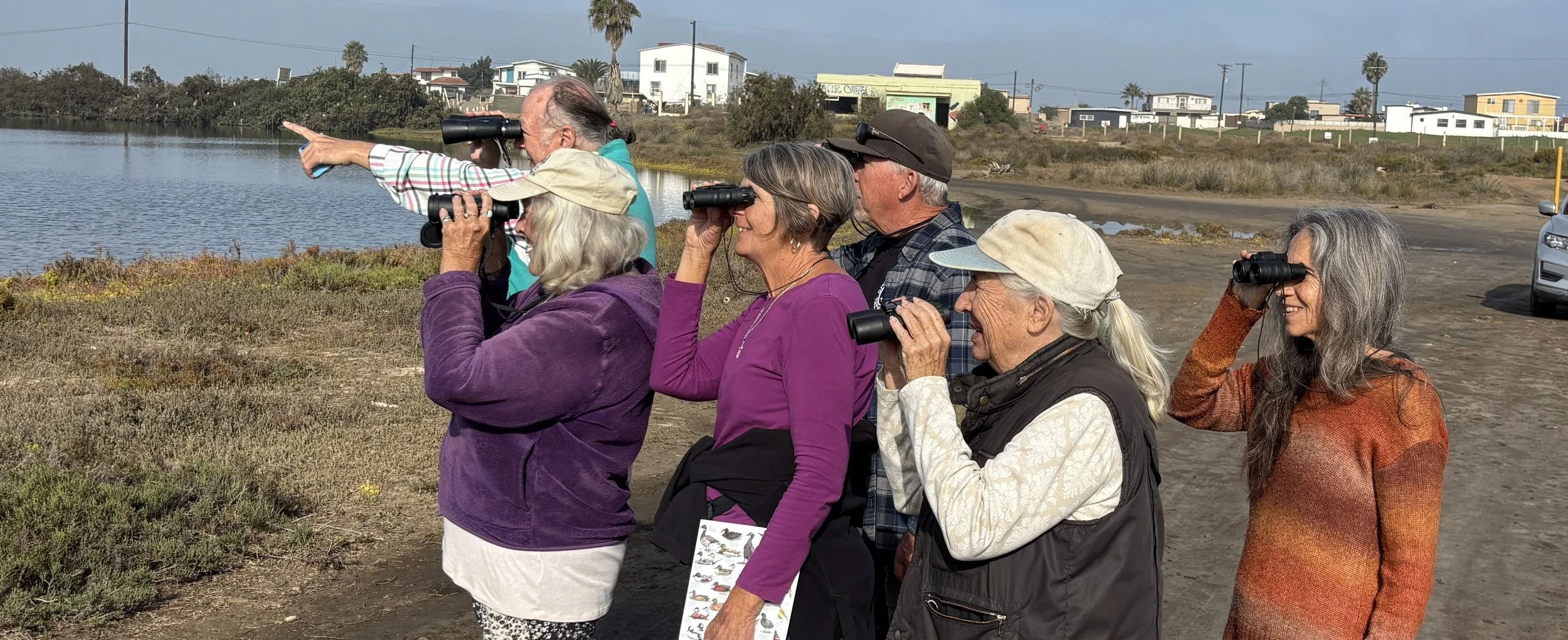
The Punta Banda Birding Club will meet monthly and will accommodate birders with limited mobility, and both novice and experienced birders. You don’t have to be a member of the “club” to attend - just come when you can!