Discovery and Naming of a New Species at Punta Banda Estuary

Dudleya josedelgadilloi is one of the central elements of the logo of the Reserva Privada Antonio Perisky, because it represents the unique flora that survives in the narrow strip where ocean, sand, and Mediterranean climate converge, and it symbolizes a conservation model grounded in scientific knowledge and local stewardship. Reserva Privada Antonio Perisky is a private reserve in the Punta Banda Estuary dedicated to conserving the area’s unique and rare flora and fauna. By featuring Dudleya josedelgadilloi in its logo, the Reserva Privada Antonio Perisky sends a clear message: conservation begins with understanding. Protecting biodiversity requires science, long-term stewardship, and collaboration among researchers, land managers, and local conservation alliances.
You may be familiar with succulent plants in the genus Dudley, often referred to as "liveforevers" due to their remarkable longevity and hardiness. These plants are characterized by a fleshy rosette of leaves with a central stalk emerging from the center of the rosette in the spring, bearing clusters of tubular or bell-shaped flowers that bloom in shades of white, yellow, pink, or red. These plants are typically well-adapted to coastal cliffs and rocky habitats. But Punta Banda is home to a remarkable species of Dudleya: among all known species in the genus, Dudleya josedelgadilloi is the only Dudleya known to grow on sandy substrates. Rather than anchoring itself on rocks and cliffs like other Dudleyas, it grows in coastal sands where wind, salt spray, and shifting soils create challenging conditions for plant life. And this species was first discovered at Punta Banda Estuary!
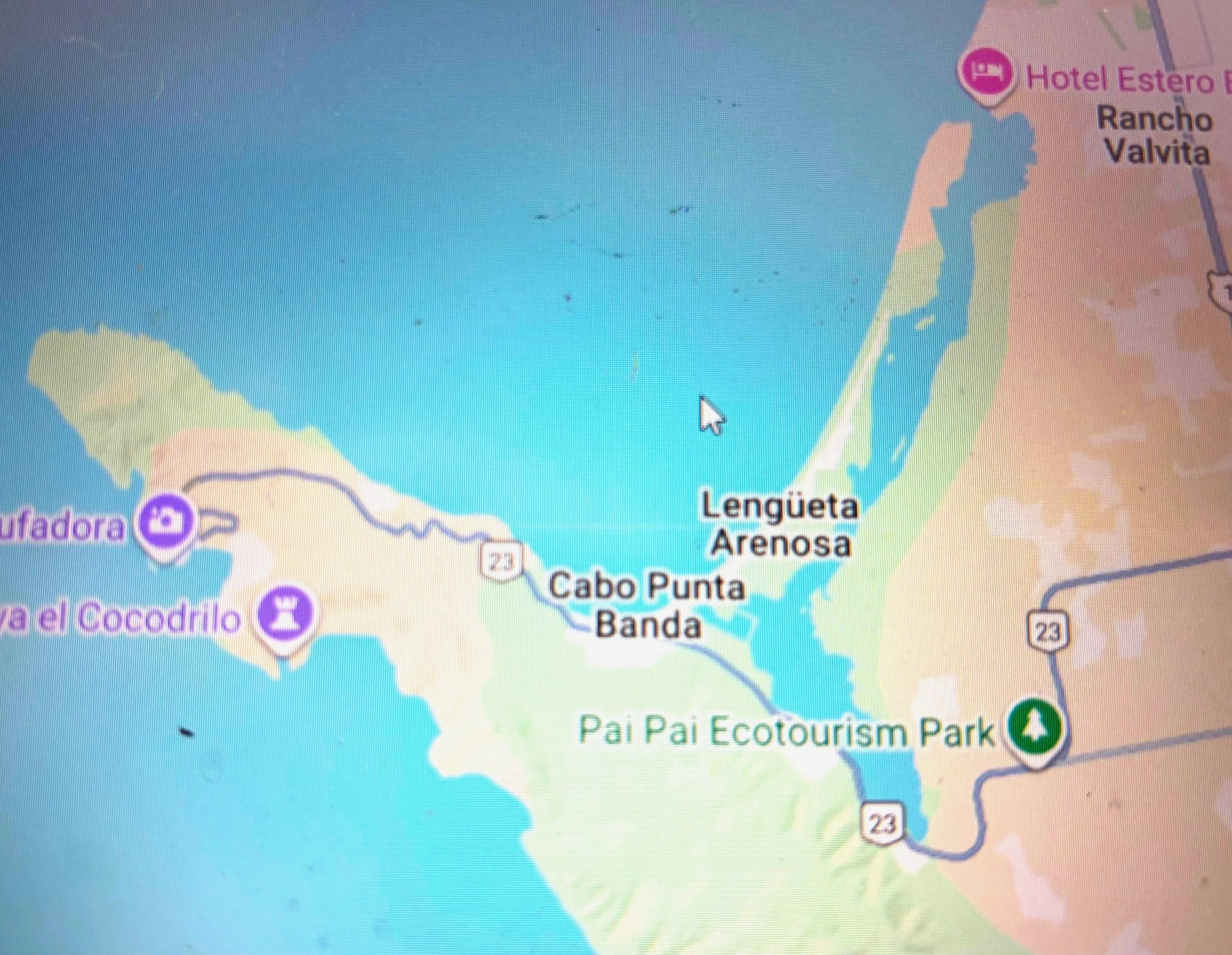
Lengüeta Arenosa, home to “la lengüeta” at the Punta Banda Estuary
This succulent bears the common name “la lengüeta” by locals. “Lengüeta” is Spanish for “little tongue,” and perhaps the original name was due to the tongue-like appearance of the leaves. But most likely the common name comes from “Lengüeta Arenosa,” meaning “tongue of sand” and referring to the sandy spit bordering the estuary where the plant was originally discovered by botanists and donned with the scientific name, Dudleya josedelgadilloi.
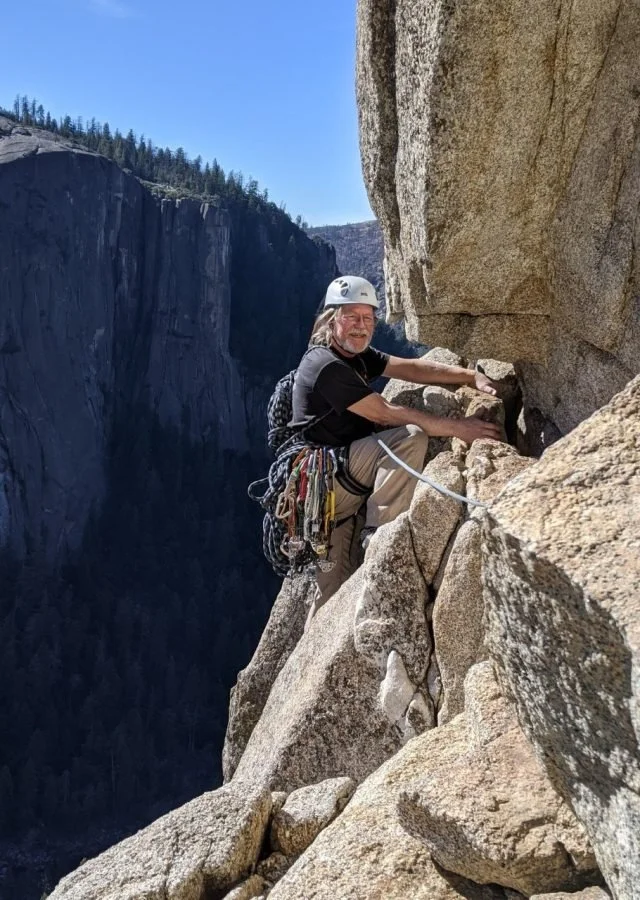
Stephen McCabe, intrepid botanist who first named Dudleya josedelgadilloi, demonstrating his dedication as he scales the cliffs of Yosemite looking for a new species.
Not until 2023 was “la lengüeta” recognized by scientists as a distinct species. The fieldwork that provided key evidence for recognizing Dudleya josedelgadilloi as a new species took place within the Reserva Privada Antonio Perisky. The botanical expedition was guided by the reserve’s Director of Management, Hiram Moreno, a local who grew up at the estuary, highlighting the active role that private conservation areas and locals can play in advancing scientific discovery. The primary botanist on this expedition was Dr. Stephen McCabe from UC Santa Cruz Arboretum & Botanic Garden. Stephen is a live-forever specialist who has combed California and Baja looking for new species.
The discovery of this new species in the reserve demonstrates that conservation is not limited to protecting what is already known. In many cases, it is precisely these protected landscapes that allow scientists the time, access, and ecological integrity needed to discover species that science are not yet recognized.
Describing a new species is not simply an academic exercise. Taxonomy—the science of naming and classifying organisms—is the foundation of conservation. Without a name, a species cannot be assessed for extinction risk, protected under law, or prioritized in management plans.
Only through careful fieldwork, detailed measurements of living plants, and rigorous morphological and statistical analyses did scientists determine that this plant represented a distinct species. As a necessary step for formally naming a new species, in 2023 Stephen McCabe described Dudleya josedelgadilloi in a peer-reviewed paper published in a highly reputable botanical journal, Madroño. Then, as another requisite, a physical specimen (called the “type specimen”) was preserved and housed in a permanent institution for future verification. Stephen collected the type specimen from Lengüeta Arenosa and it’s now housed at the arboretum of University of California, Santa Cruz.
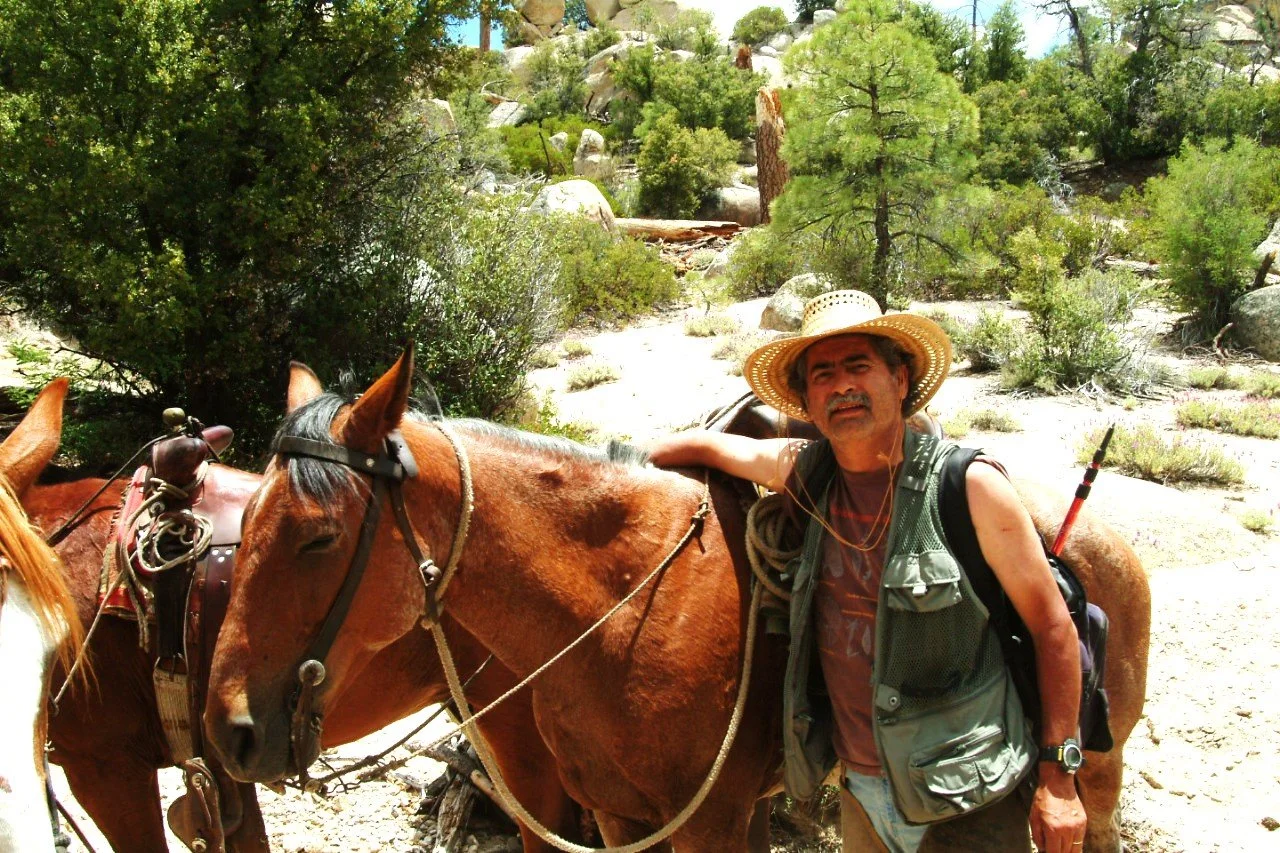
Jose Delgado, our featured species’ namesake, combing the mountains of Baja for rare or new plant species.
Scientific naming of a new species must follow the International Code of Nomenclature for algae, fungi, and plants (ICN). You may think that if you ever find a new species you can name it after yourself for all posterity. While not strictly illegal under the ICN, it’s heavily frowned upon and considered poor scientific etiquette to name a new plant species after yourself. Commonly, a new species is named after another, revered scientist. Stephen McCabe named Dudleya josedelgadilloi after a cherished professor at the UABC in Ensenada. Jose Delgado is another dedicated botanist who traveled great lengths to find new species.
Sandy coastal habitats are among the most threatened ecosystems in Baja California, facing pressure from development, off-road vehicle use, and erosion. Due to its vulnerability as a result of the shifting sands it lives in, its narrow geographic range, and its exposure to human disturbances, Dudleya josedelgadilloi is imperiled as a species. It is protected under Mexican environmental law and by international agreements such as CITES, which regulates the trade of species at risk. These protections are especially important for Dudleya species, which have increasingly been targeted by illegal plant collectors for the ornamental plant trade. Legal protection, however, is only as effective as the awareness that supports it. Recognizing this plant as a distinct species strengthens the legal and scientific basis for its conservation and helps prevent its silent loss.
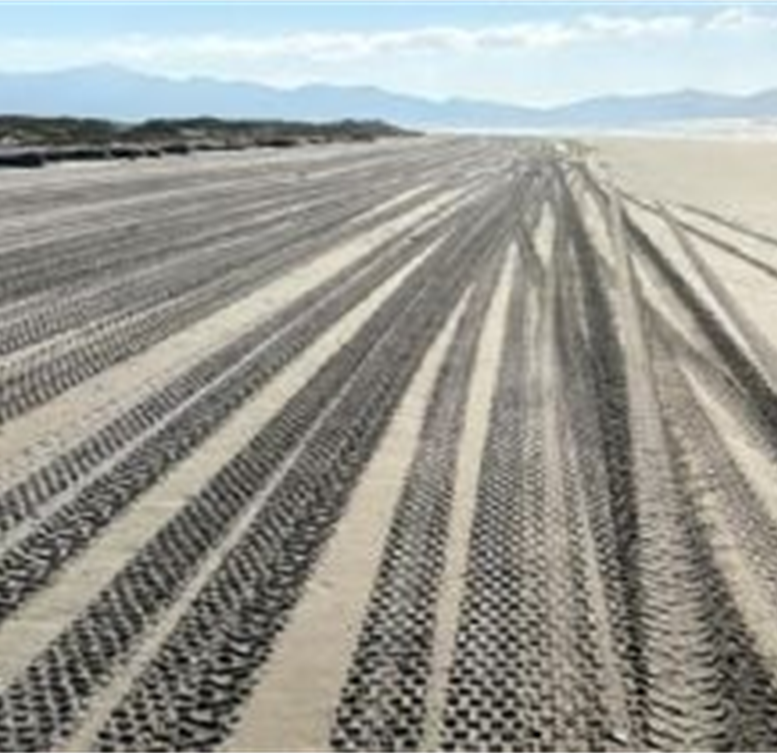
Tracks from ATVs, threatening the rare flora and fauna of our local beaches.
The recognition of Dudleya josedelgadilloi underscores an important lesson: even in regions that are relatively well studied, new species remain hidden in plain sight. Punta Banda is not just a scenic landscape—it is a living archive of evolutionary history and biodiversity.
For the Alianza de Conservación de Punta Banda, this species serves as a reminder that conserving habitats also means conserving the knowledge they hold—and acting before that knowledge, and the species it represents, is lost.