by El Berryman
Turning on a faucet on the Punta Banda peninsula begins with a fundamental calculation: How much water is left in the tank? Beyond the reach of dependable municipal lines (CESPE), water must be actively obtained, transported, treated, stored, and conserved. All residents and agricultural operators are tied to the same stressed underground hydrological systems of the Maneadero-Punta Banda region.
This essay is part two of a three-part series on Punta Banda water. Part one focused on the Maneadero aquifer and its importance and threats. This essay, Part two, focuses on water delivery, treatment, and use, as well as environmental and socioeconomic consequences of treatment and consumption. Part 3 will focus on water forecasts and potential solutions to the local water crisis.
The Source: Two Local Aquifers
The Mandeadero Aquifer
The Maneadero aquifer serves as the primary water source for the Punta Banda peninsula and acts as a critical lifeline for the broader Ensenada region (see previous post with more information on this aquifer). Fed mostly by the San Carlos and Las Ánimas intermittent streams, it carries the heavy burden of supporting both intensive export agriculture and urban infrastructure.
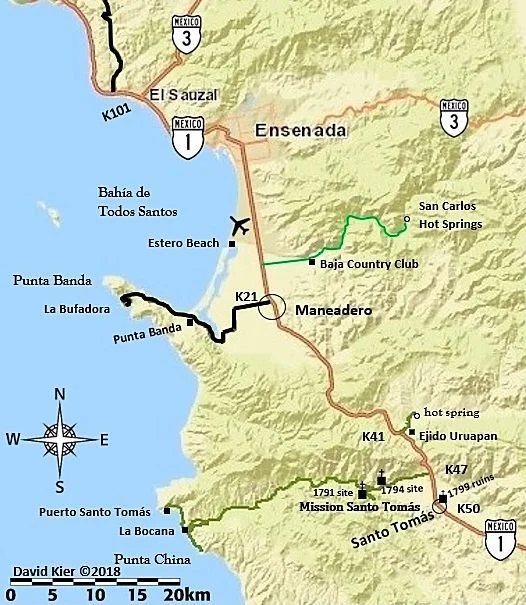
Map showing locations of Mandeadero, San Carlos, and Santo Tomas in relation to the Punta Banda peninsula.
Because the Maneadero aquifer (the largest water source on the peninsula) supports both local urban demand and intensive agriculture throughout the Ensenada area, heavy pumping has steadily lowered the water table and triggered saltwater intrusion creating ongoing water quality and sustainability challenges for everyone relying on this source (Gonzales-Aceveda 2018).
Most of the water from the Maneadero aquifer (about 67%) is used for agriculture. In the late 1990s, local wells around the Ejido Nacionalista yielded relatively fresh water, with salinity hovering around 700 parts per million (PPM), well within drinkable limits and suitable for most crops (Michael O’Gorman, pers. comm. 2026). However, decades of heavy over-pumping have drastically dropped the underground water table. Without enough freshwater pushing back, the Pacific Ocean has seeped inward. Today, salinity levels in many agricultural wells pumping from this aquifer have surged into the thousands of PPM, far exceeding the threshold for traditional farming and forcing growers to adopt advanced reverse osmosis (RO) on-site to filter irrigation water (Michael O’Gorman, pers. comm. 2026). Local wells drawing water from the aquifer for household use face similar changes with increasing salinity, in addition to pollution from agricultural runoff, septic systems, and other sources.
Santo Tomás aquifer
Most residents on the Punta Banda peninsula purchase their drinking water from the local water store in Cantu, Purificadora Califonia, near the base of the peninsula. The store owners truck this water from wells in the Uruapan area to the south, which draw from the Santo Tomás aquifer (Sergio Perez Martin de Campo, pers. com. 2026). Fed by seasonal runoff from the Santo Tomás basin, this aquifer supports local rural communities alongside smaller-scale agriculture like vineyards, olive groves, and row crops. Because it does not shoulder the massive municipal demand of a major city like Ensenada, Santo Tomás aquifer water remains significantly cleaner and fresher than Maneadero aquifer water.
The secret to Santo Tomás’s cleaner water comes down to underground water pressure—specifically, what hydrologists call a positive hydraulic gradient. In Santo Tomás, groundwater near the coast stays roughly 3 meters (9.8 feet) above sea level. That elevated water table creates a steady, natural seaward flow of freshwater that acts like an invisible wall, pushing back against the ocean (CONAGUA 2024). This contrasts with the Maneadero aquifer, where over-pumping has caused the water table to drop below sea level, reversing that natural flow and essentially pulling seawater inland. Together, the two aquifers offer a clear look at how human demand and natural water pressure determine the fate of coastal water supplies.
The Journey: from Well to Tap
Who gets the water?
For decades, both local farms and the nearby city of Ensenada have relied heavily on pozos (wells) to pump groundwater from the aquifers to the surface. Because both the Maneadero aquifer and the Santa Tomas aquifer are officially designated as overexploited, Mexico’s federal water agency, the Comisión Nacional del Agua (CONAGUA), strictly controls who can tap into the ground (CONAGUA 2024). Landowners cannot legally drill a new well without a formal drilling permit and water extraction concession from CONAGUA. Due to the ongoing water deficit, brand-new concessions are rarely granted (Cruz-Ayala and Megdal 2020).
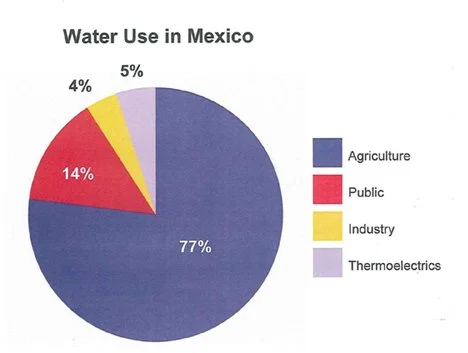
Water use in Mexico as a whole (Water Uses in Mexico 2015).
Groundwater in Maneadero is mainly used for agriculture (67%), household and business use (29%) and industrial activities (4%) (Gonzalez-Aevedo et al, 2018). The Maneadero aquifer supplies roughly 38% of the municipal drinking water for the city of Ensenada (Gonzalez-Acevedo et al. 2019). Local farmers—who represent the largest water users in these valleys— typically irrigate crops using their own private wells (Michael O’Gorman pers. comm. 2026), which are tightly regulated. Private growers who hold official Concession Titles must regularly measure and report how much water they pump into the Registro Público de Derechos de Agua (REPDA), Mexico's National Water Registry, while paying specific extraction and sustainability fees. Falling behind on payments, exceeding pumping limits, or missing reporting deadlines carries severe consequences: landowners risk the permanent loss of their well rights (Conagua 2026). However, growers are increasingly being directed to use reclaimed water. (Look for more on reclaimed water in the upcoming Part Three of this three-part series.)
Under Mexican law, water for human consumption and daily household use takes top priority over farming or commercial needs. When private agricultural wells are abandoned, over-pumped, or poorly managed, CONAGUA actively steps in to revoke those private concessions. The agency then reassigns that water as permanent, non-transferable Allocation Titles (Asignaciones) to public utilities like Ensenada's water agency, CESPE, ensuring taps keep running for local residents. (Conagua 2020; CESPE 2026). However, the Punta Banda peninsula is outside the CESPE service area, so residents and businesses must rely on alternative sources for receiving water.
Agua de Llave
Agua de llave is the Mexican term for tap water, which is not palatable or safe for drinking. Untreated raw groundwater from the Maneadero aquifer is affected by agricultural and wastewater runoff, septic systems, and saltwater intrusion. People use this untreated water (sometimes disinfected with chlorine) for household purposes such as washing clothes, cleaning, and flushing toilets—while relying on dedicated local purification shops (purificadoras) for drinking and cooking (see Agua purificada, below).
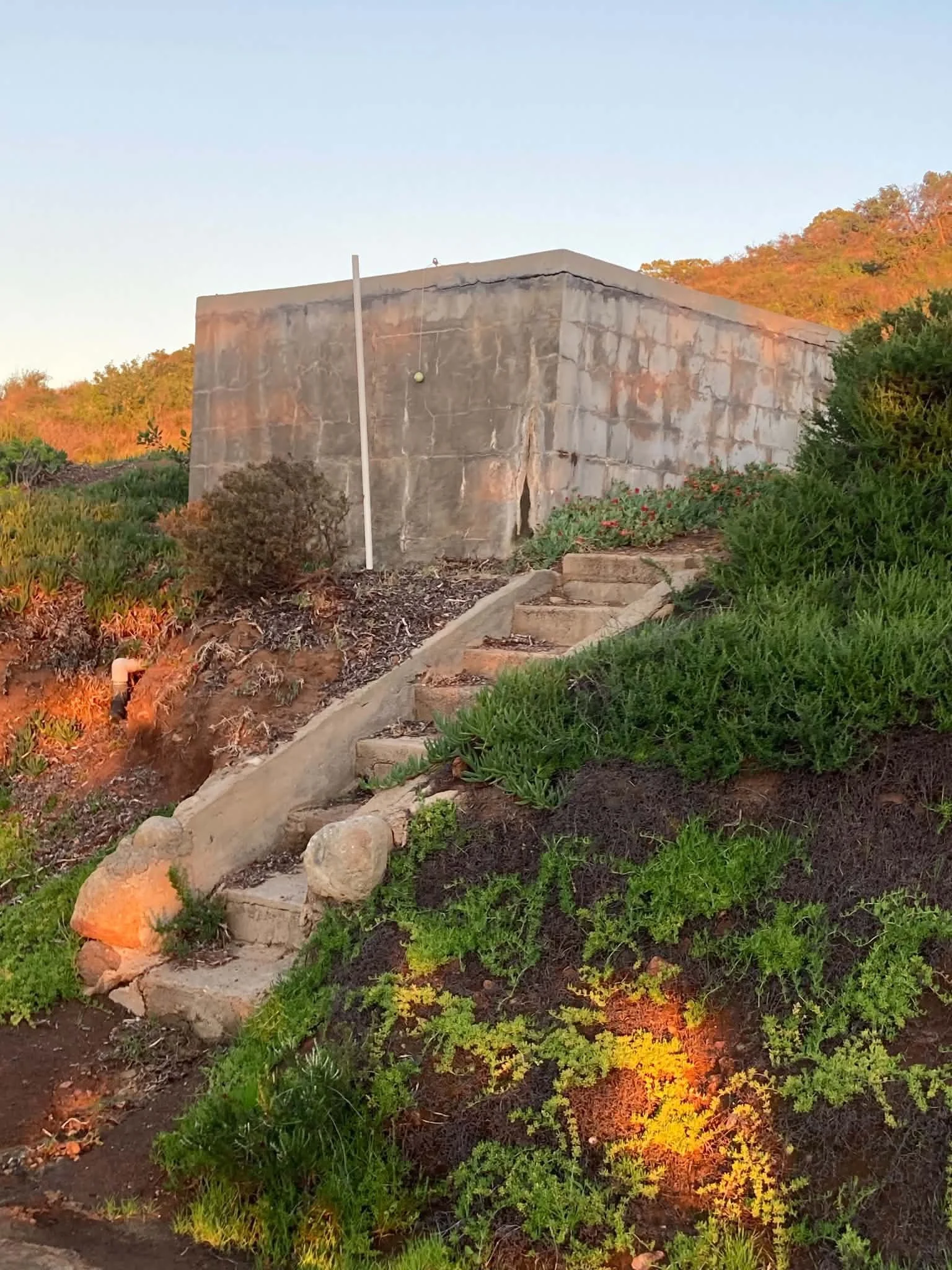
A typical concrete pila for storage of non-potable water.
The water quality from the Maneadero aquifer is typically dependent on the location of the wells. Wells further from marine influence tend to produce fresher groundwater than wells near the coast (Zhah et al. 2025). In some cases, however, the aquifer has pockets of fresher water near the coast, just a short distance from more saline wells (pers. comm., Mark Lurie 2026). But salinity in most or all areas is expected to continue increasing. One study demonstrated that from 1976 through seawater had intruded progressively from west to east over time in Maneadero aquifer, more significantly in the southern section than the northern (Flores 2006, in Zhah et al. 2025). The central coastal zones of the aquifer have been the most severely affected areas, followed by the southwestern regions (Daessle et al. 2014).
Agua de llave is trucked to Punta Banda residents from a variety of local wells sourced from the Maneadero Aquifer. Wells located near the Calimax in Maneadero supply the majority of the non-potable water distributed to residential communities and businesses on the peninsula via private water delivery trucks (pipas) (Alhan Macliz, pers. comm. 2026). These wells draw from the aquifer in an area moderately affected by saltwater intrusion as of 2026. This water is then loaded into the water trucks, and delivered to households who typically store the water in concrete cisterns (pilas).
Local wells on the Ejido Esteban Cantu (communal Mexican land) in Punta Banda provide household, non-potable water for the ejido’s members (ejidatarios) and other residents. Each of several neighborhoods in the Ejido are separately managed and draw from different wells, at least one of which is located adjacent to the Punta Banda estuary and is quite saline. The well water is pumped uphill to a large tank at the upper end of the town, treated with chlorine, and released at regular intervals to households who store the water in their separate pilas (cisterns). (Juan Carlos Perez Esparza, pers. comm. 2026)
Much of the land outside the ejido on the peninsula is privately owned by Mexican nationals who lease lots to individuals (many of whom are expats from the United States). These properties are referred to as Campos. Some of the campos, such as Campo La Jolla, have their own wells that feed directly into plumbing systems to service campo households. Sometimes referred to as camp water, this is non-potable, generally untreated, and quite saline. The Pabloffs, who own Campo La Jolla, also have a well located on property further inland (in Ramahal), with water that is fresher than the camp water but still somewhat saline, and they truck it to local households. Some campos, such as Nueva Ensenada (now Baja Cove), treat the local well water through a reverse osmosis system - although it is not treated to a level that it would be potable (see discussion on water treatment below).
Several wells servicing the peninsula are on private lands in the San Carlos area, where Maneadero aquifer is fed by freshwater creeks. This well water is less saline and of overall higher quality than water closer to Maneadero and the peninsula, not only because it’s fed by freshwater creeks, but it’s also outside the influence of most urban and agricultural groundwater pollution. It’s still affected by some marine influence though. Punta Banda residents sometimes order water from these San Carlos wells to receive a fresher source than the more commonly used Maneadero wells, to use for showers and watering plants, but this water is still too saline for drinking and isn’t safe for drinking if untreated (Alhan Macliz, pers. comm., 2026).
Agua tomar
Drinking water in Mexico is often referred to as agua purificada, and sometimes agua tomar (Alhan Macliz, pers. comm., 2026). Under Mexico’s drinking-water standard, NOM-127-SSA1-2021, drinking water must meet strict quality criteria.
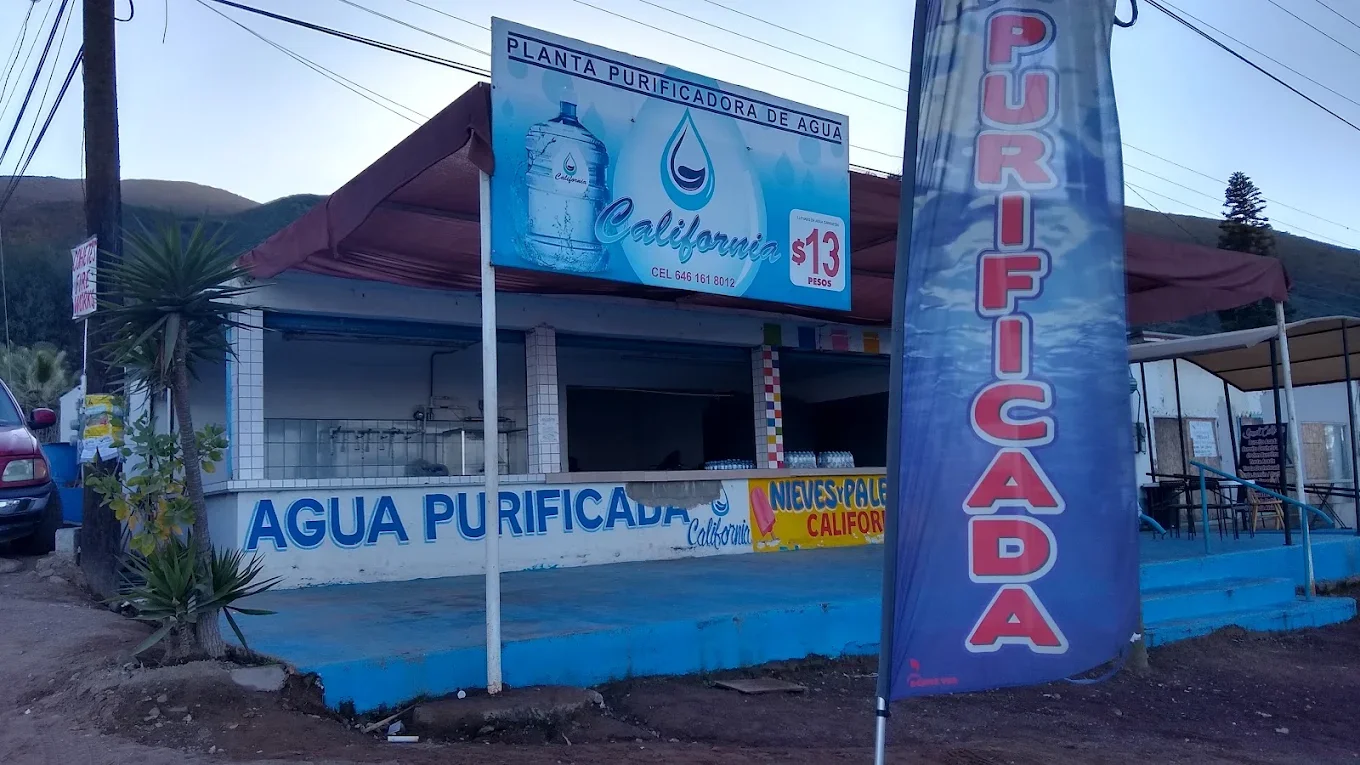
Purificadora California in Cantu
Outside municipal zones in Mexico, agua tomar is often obtained from privately owned purificadoras, where it’s commonly treated with reverse osmosis (RO) which reduces the salinity caused by seawater intrusion into the aquifer (see more on water treatment below). Most residents on the Punta Banda peninsula purchase their water from Purificadora California located in the town of Cantu. This water is usually trucked to the purificadora from wells sourced by the Santa Tomas aquifer, a less taxed and much purer aquifer than the Maneadero aquifer (Sergio Perez Martin de Campo, pers. comm. 2026).
After Purificadora California treats the water from Santo Tomas wells to drinking water standards, the treated water arrives at local businesses and residences in two ways. Some users order their water to be delivered via pipas (delivery trucks) and the water is then stored at households in tanks of various types and sizes. Other users go to the Purificadora California to pick up water in large 5-gallon bottles referred to as garrafónes - these are often used by residents unable to afford large tanks or delivery service.
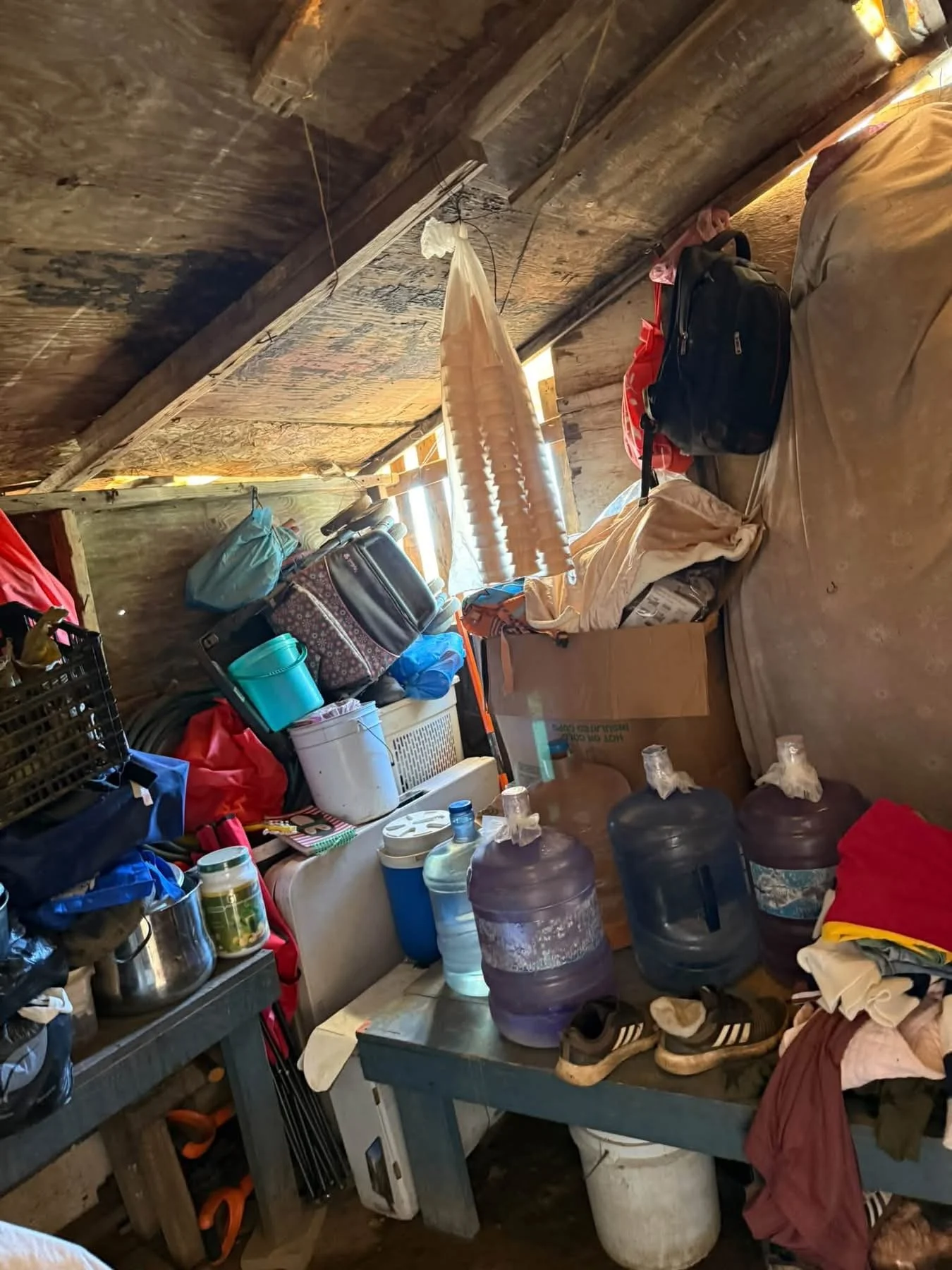
Impoverished household storing water in 5-gallon garrafones.
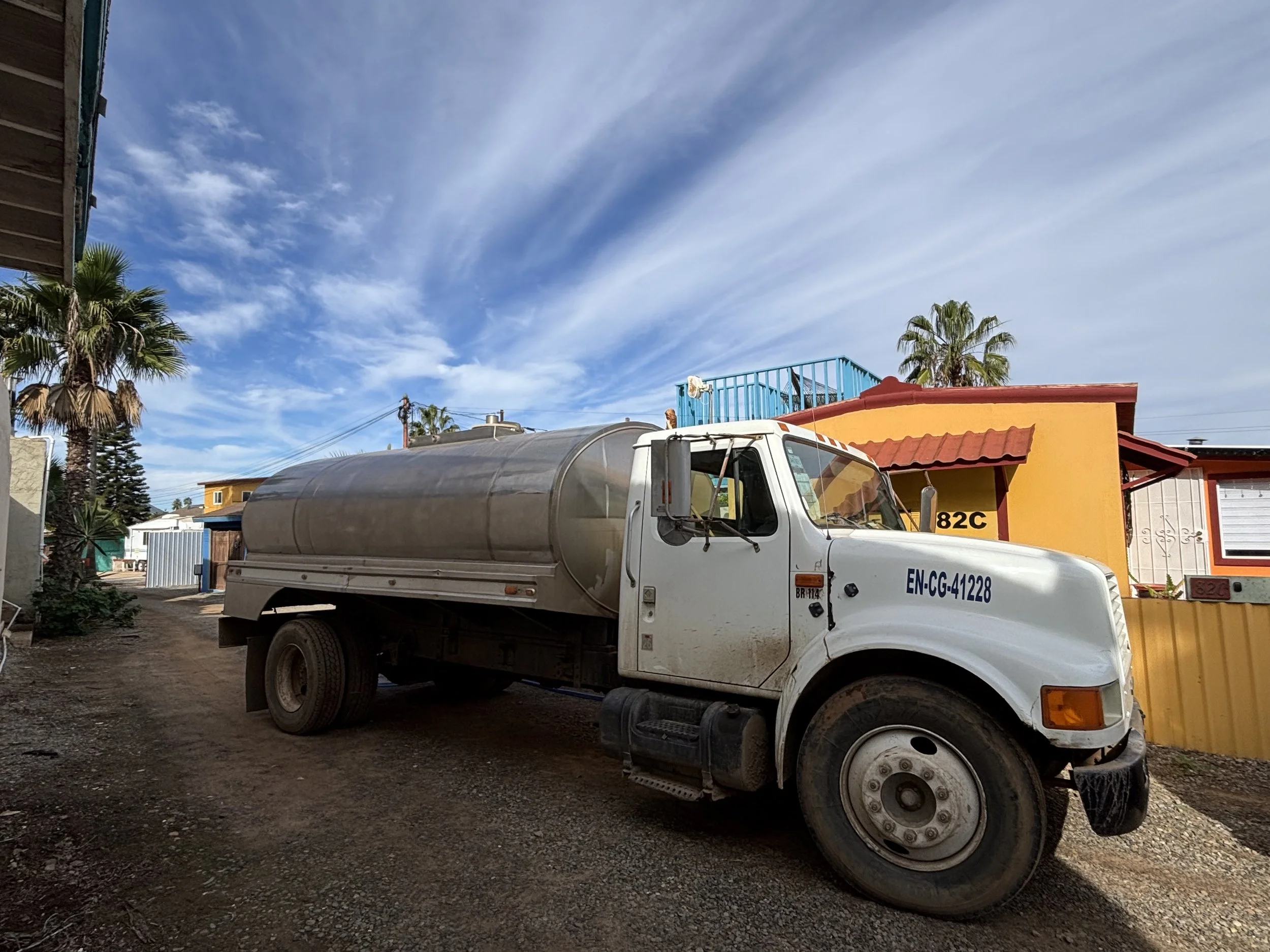
Water truck (pipa) delivering drinking water from Purificadora California to a home at Campo La Jolla.
Some local users purchase their garrafón water from Maneadero supermarkets rather than Purificadora Califonia. This is often municipal tap water (supplied by CESPE) that has undergone multi-stage purification - primarily reverse osmosis, activated carbon filtration, and ultraviolet sterilization. It’s preferable for both the environment and local economy, however, to support local purification systems and refilling stations rather than multi-national corporations for drinking water, which requires either buying water directly from the local purificadora or carefully checking the labeling on bottled water purchased from stores.
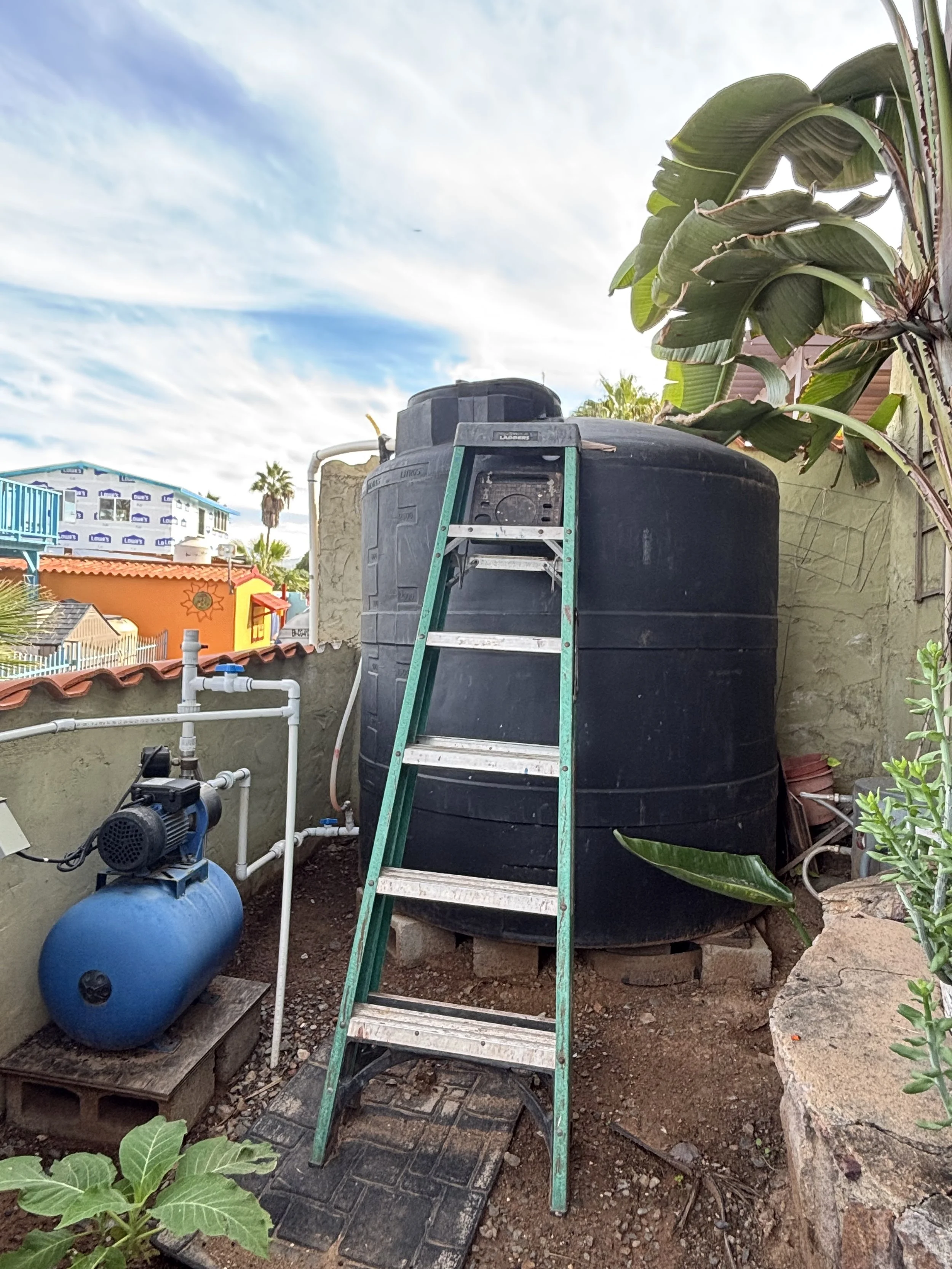
Typical private tank for storing drinking water, with pump.
The market for pre-packaged plastic water bottles requires industrial bottling, massive distribution networks, and shelf space in convenience stores (like OXXO) and supermarkets, which favor global conglomerates. Purchasing store-bought bottled water supplied by multinational corporations in the Ensenada area exacerbates local resource depletion and financial inequality. Brand names owned by multinational conglomerates (such as Nestlé/Perrier/S.Pellegrino, Coca-Cola’s Dasani, or PepsiCo’s Aquafina) will list the corporate parent company, bottling plant location, and source somewhere of the bottle. These large corporations extract millions of liters of vital water from regional aquifers and springs—often under heavy concessions—during periods of severe drought and strained local infrastructure. Instead of helping communities access clean hydration, these firms profit by packaging local water into single-use plastic and selling it back at high prices while contributing to plastic pollution and watershed stress. Supporting local purification systems and refilling stations, or using home filtration units, helps keep money and natural resources within the community rather than fueling corporate water exploitation. (Tamara Pearson 2022)
Local Water Treatment
The quality of water reaching homes in Punta Banda depends not only on the location of the source wells, but also the level of treatment prior to delivery. Untreated raw well water outside of municipal service zones generally contains not only salt from seawater intrusion and other dissolved minerals such as iron and manganese, but depending on well location it contains varying levels of nitrates from agricultural runoff and septic discharge, pathogens, and pesticides (Gonzales-Acevedo 2018). Additionally, depending on the source, the water contains calcium carbonate, which contribute to kidney problems and causes limescale buildup in plumbing. Various methods are used to treat the well water, each with their advantages and limitations.
Reverse osmosis is the principal method used locally when dissolved salts and other contaminants must be removed. Water is forced through a membrane that allows water molecules to pass through while rejectiong most dissolved salts and many metals, miicroorganisms, and other contaminants. Commercial RO systems can operate continuously and be expanded by adding memrane units, making them well suited to purificadoras that produce large quantities of drinking water. Local farmers also use RO to treat their own private well water for irrigation (Michael O’Gorman, pers. comm., 2026). Some Punta Banda communities such as Baja Cove, and individual households, have their own RO systems, although they do not treat raw well water to drinking quality (pers. comm., John Kinabrew and other community members, 2026).
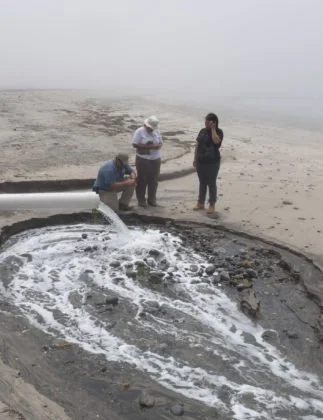
Brine flowing from a desalination plant at San Ramón, Baja California, Mexico (Image: Alan Harper) in 20 Years: Dialogue Earth
The principal environmental concern with RO is the concentrated reject water, or brine, left behind. The amount produced varies considerably with source-water quality and system efficiency. When highly saline concentrate is discharged onto land or into drainge systems, salts can accumulate in the soils and eventually reach the estuary through runoff or groundwater. The RO concentrate can form toxic salt crusts that sterilize soil and prevent native plant growth, eventually leaching into the estuary during rain events. Because RO waste in the form of dense brine can settle on the estuary mudflats, it can create a brine layer that blocks oxygen exchange. This suffocates bottom-dwelling invertebrates (clams, worms, crustaceans) that form the base of the estuary's food web (Guerro and Valenzuela, Terra Penisular, accessed 2026), depriving the estuary of critical food sources for fish and the approximately 144 bird species that use the estuary as they travel along the Pacific flyway. While Punta Banda’s native plant species are adapted to brackish conditions, sudden spikes in salinity cause physiological water imbalance, stunting growth, reducing photosynthesis, and killing sensitive eelgrass beds and salt marsh vegetation that provide vital habitat for many wildlife species, including the endangered Ridgeway’s rail.
Local agricultural RO concentrate ultimately reaches the Punta Banda estuary (Michael O’Gorman, pers. comm., 2026), making irrigation and disposal practices an important consideration for estuary management. While the majority of RO waste contaminating the estuary is likely from agricultural sources, treatment of drinking water can also pose a risk. The quality of well water sourcing the purificadora is a primary factor dictating the amount of briny waste product. Purificadora California in Cantu provides a useful example. A former owner used saline water from the Maneadero wells near Calimax, drawing from the Maneadero aquifer, and roughly 25 percent of the incoming water became RO reject water. According to Alhan Macliz, this wastewater was discharged onto the highway between the purificadora and the estuary, where substantial amounts could wash into the wetland (Alhan Macliz and Sergio Perez Martin de Campo, pers. comm., 2026). The current owner instead trucks in higher-quality, less saline, groundwater from the Santo Tomas aquifer. Because this water contains less salt to begin with, considerably less concentrated RO wastewater is generated during treatment. The wastewater is held in a reservoir and made available without charge for appropriate non-potable uses rather than being discharged into the estuary (Alhan Macliz and Sergio Perez Martin de Campo, pers. comm., 2026). Thus, the environmental footprint of RO depends not only on the technology, but also on the quality of the source water and how the resulting concentrate is managed. (As a sidenote, the Nueva Ensenada well on the “spit” at the estuary draws from a lens of relatively fresh water under the sand dunes that floats above heavier brackish water, and the relatively small amount of brine released after RO treatment can be as salty as or no saltier than seawater at the discharge point, per former resident John Kinabrew.)
The treatment processes at purificadoras illustrate how various treatments are used together with RO. Water trucked to the purificadora is passed through a screen to remove silt, dirt, and larger particle. The water is also chlorinated to control bacteria and other microorganisms, then passed through activated carbon filtration to remove chlorine, along with tastes, odors, and some lingering organic contaminants. Removing chlorine before RO is particularly important because chlorine can damage RO membranes. The water then passes through RO, which removes dissolved salts and other contaminants that chlorination and carbon filtration do not remove. Finally, the purified water is treated with ultraviolet (UV) light or Ozone injection to provide an additional barrier against microorganisms, including chlorine-resistent protozoa such as Cryptosporidium and Giardia, without reintroducing chlorine into the finished drinking water.
Non-potable water often receives partial treatment before delivery, although falling short of drinking-water standards. There is a strict multi-level government authorization process for pipas delivering non-potable water, though in practice, many pipas operating in the Punta Banda and Maneadero areas operate informally or outside full commercial compliance. Non-potable water water obtained by authorized pipas is generally disinfected with chlorine for household use, whereas water hauled or piped directly from private wells may be untreated. The Ejido Estaban Cantu treats its local well water with chlorine before distributing it to the ejidaterios and other Cantu residents (Carlos Perez Esparza, pers. comm., 2026).
Some residents of the Punta Banda peninsula treat the non-potable water delivered to their private tanks or pilas prior to use. This improves the water quality but seldom if ever brings it to drinking water standards. Some use their own RO systems. Others only use active carbon filtration, which does not desalinize the water or remove nitrates or total dissolved solids, but removes unpleasant odors and a range of organic contaminants, including some volatile organic compounds (VOCs), pesticides and herbicides.
Punta Banda residents sometimes further treat their drinking water after it is delivered to their holding tanks and before use, as algae and other contaminants can be introduced to their holding tanks after water delivery. One private treatment approach is to use standard RV units with a multi-stage cannister system with sediment and carbon filtration and UV sterilization. These systems are sanitized with chlorine, which is cleared from the water through the carbon filtration.
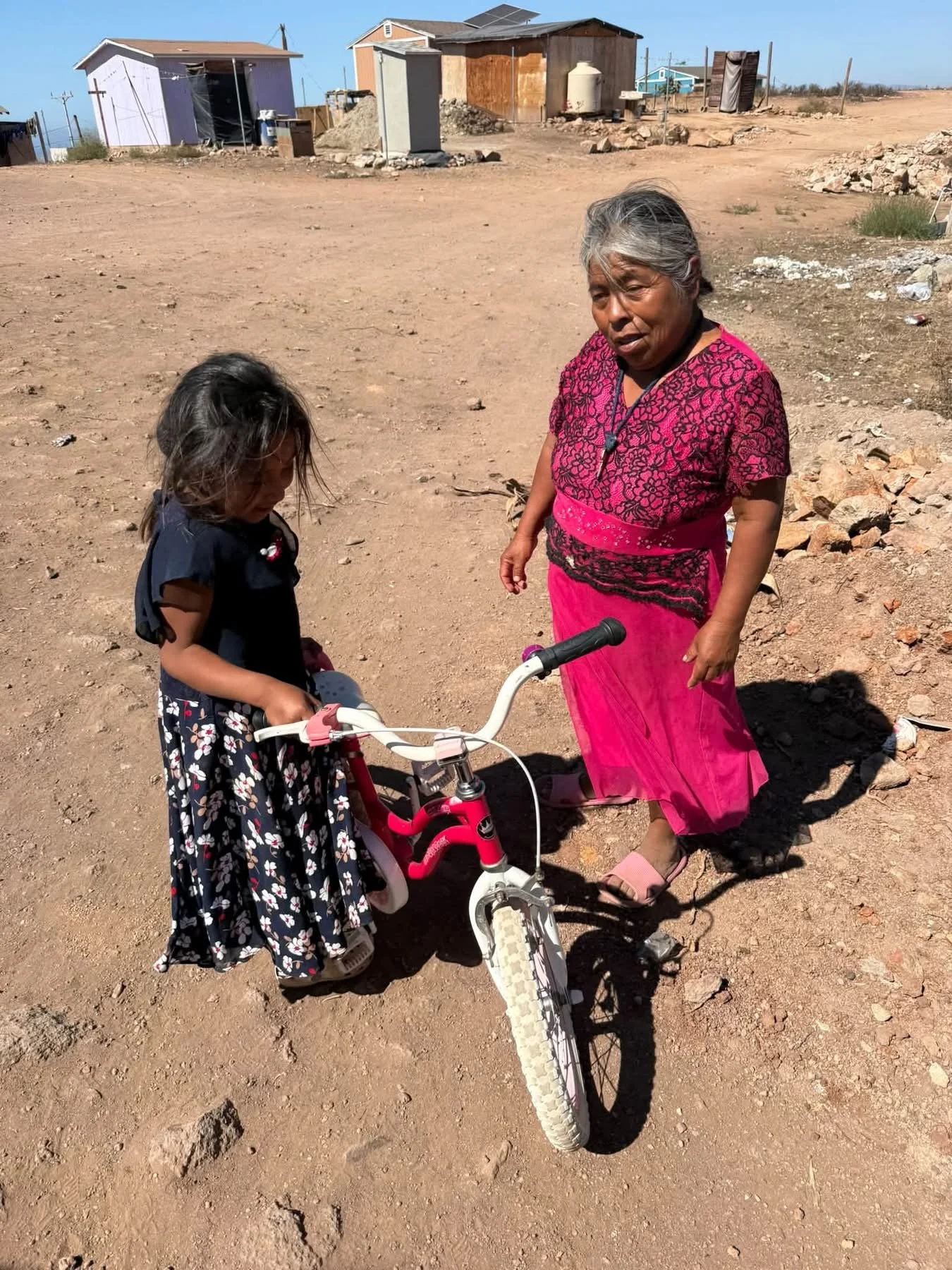
Impoverished families struggle to obtain safe water for household uses and drinking. (This little girl recieved a shiny new bike from Feeding Families.)
Of course, many residents on the Punta Banda peninsula and nearby Maneadero are not fortunate enough to be able to afford treatment systems. Low-income residents face a severe daily survival challenge. For drinking and cooking, these households must choose between stretching scarce cash to buy purified water or risking consumption of untreated water. Paying for delivered water tankers (pipas) or personally hauling heavy five-gallon jugs (garrafones) devours a disproportionate share of a low-income household's weekly earnings—often forcing difficult trade-offs with food and other essentials. Those who cannot consistently afford purified alternatives face heightened exposure to waterborne pathogens, heavy metals, and high salinity, turning a basic natural resource into a persistent source of economic hardship and risk of disease.
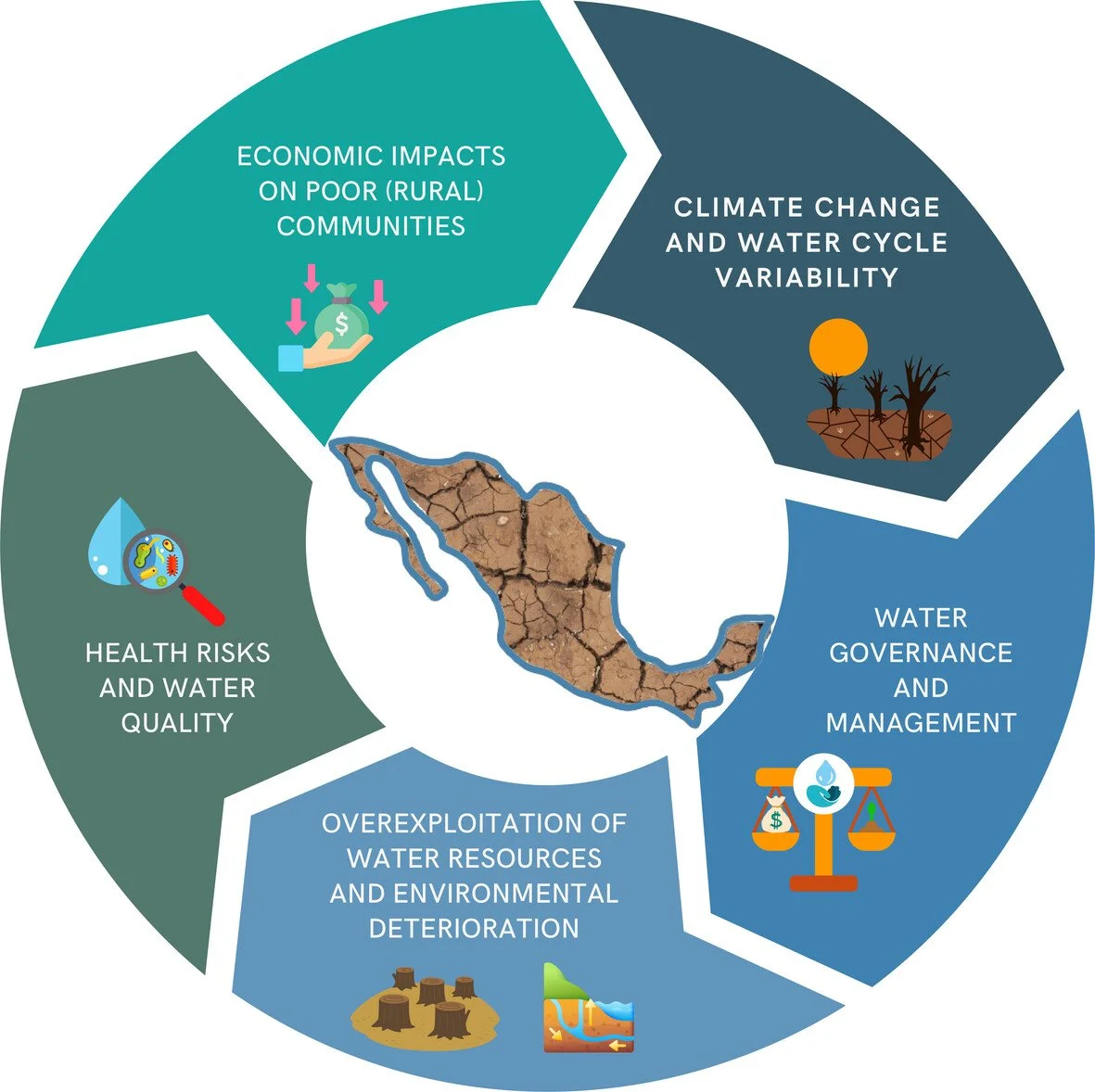
Graphic representation of water scarcity dynamics in Mexico (Pacheco-and Francisco Manzano-Camarillo 2024)
The True Cost of Every Drop
On the Punta Banda Peninsula, every drop of water carries an environmental and socioeconomic cost.
Overdraft and Salinization: The Maneadero aquifer suffers from heavy over-extraction that pushes pumping past safe yields. As consumption increases with a growing local population, fresh water tables drop below sea level and saltwater actively pushes inland, raising total dissolved solids and degrading local well water.
Climate Change: Climate change and erratic water cycle variability place severe pressure on aquifers by disrupting natural recharge rates. Rising temperatures accelerate surface evaporation and dry out soils, leaving less moisture to percolate underground, while erratic precipitation shifts rainfall toward brief, intense storms that trigger rapid surface runoff rather than slow soil infiltration. This unsustainable combination steadily lowers water tables, compacts underground storage capacity, and leaves coastal aquifers more vulnerable to saltwater intrusion from rising seas.
Energy Burden: Hauling water via trucks and relying on energy-intensive treatment drives up operational costs and carbon footprints.
Brine Byproducts: Processing salt-laden water generates concentrated saline brines. Discharge onto local soils or directly into the sensitive Estero Punta Banda wetlands risks localized environmental toxicity and soil salinization.
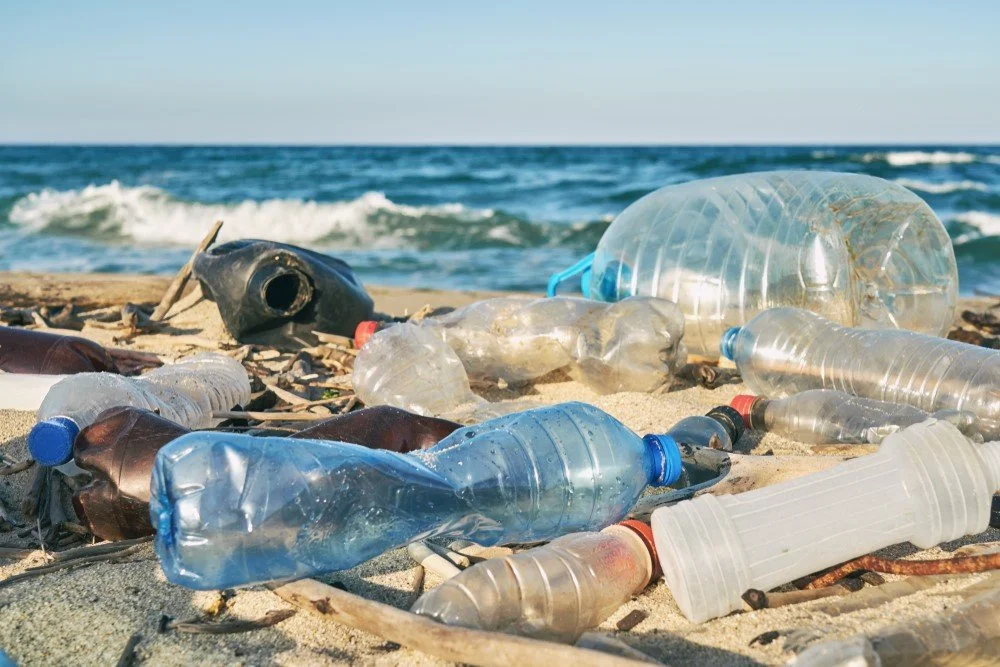
Plastic water bottles have lasting detrimental effects on the environment and human health.
Plastic Bottles: Multinational conglomerates with brand names such as Nestlé/Perrier/S.Pellegrino, Coca-Cola’s Dasani, or PepsiCo’s Aquafina profit by packaging local water into single-use plastic and selling it back at high prices. Many residents and tourists purchase this water from convenience stores and supermarkets. Manufacturing billions of single-use polyethylene terephthalate (PET) bottles each year relies heavily on fossil fuels, consuming millions of barrels of oil and emitting substantial greenhouse gases that accelerate climate change. Once emptied, the vast majority of these bottles are not recycled; instead, they pile up in landfills or enter waterways, where they break down into toxic microplastics that contaminate soil, pollute oceans, and threaten wildlife through ingestion. Because plastic takes centuries to decompose, discarded water bottles leave a lasting ecological footprint that degrades ecosystems and disrupts the global food chain.
Economic Disparity: Residents face steep, recurring costs just to access basic water, as every drop must be delivered by private water trucks and stored in household tanks. This financial burden is compounding rapidly as severe saltwater intrusion, agricultural runoff, and septic system pollution degrade the local aquifer. As water quality deteriorates, the need to import water from cleaner but more distant Santo Tomas aquifer for drinking, and heavily treat water at the purificadora, drives prices even higher.
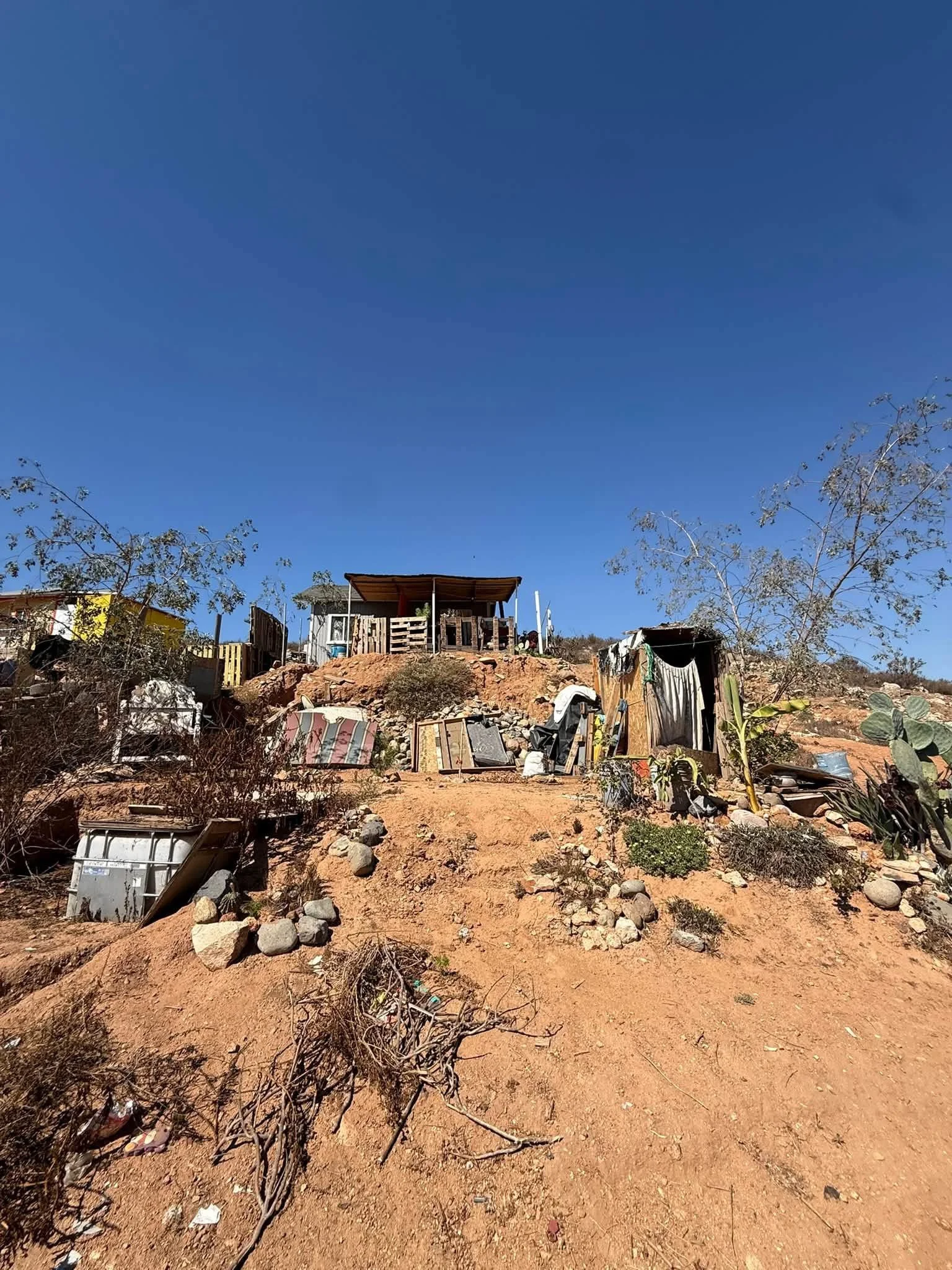
Poverty and an arid environment present extreme survival challenges in the Punta Banda/Maneadero area south of Ensenada.
While affluent homeowners and foreign expatriates can easily afford to buy from the purificadora—or install and maintain expensive filtration systems to purify their trucked-in supply—lower-income local families are left with an impossible choice. They must either spend a disproportionate share of their income on treated water or rely on an increasingly brackish, contaminated supply for daily cooking and hygiene. This reality exposes vulnerable households to serious health risks and deepens the socioeconomic divide —a disparity further exacerbated by multinational conglomerates that bottle local water and sell it back to the community at inflated prices.
Yet recognizing these limits is the starting point for practical adaptation rather than resignation. In the next article in this series, coming out soon, we will explore realistic solutions for Punta Banda. These will include solutions already being implemented as well as potential new solutions. Topics for exploration will include water reclamation, demand management, rainwater or greywater options, fog harvesting, and other innovative solutions. We will alos explore what it takes to make those approaches affordable and sustainable for everyone on the peninsula.
———————————————————————————————————————————————-
I hope you found this article informative, and I look forward to sharing Part 3 about solutions. If you have a background in water conservation and would like to share any innovative solutions to local water crises, I’d love to hear from you! You can reach me at alconpb@gmail.org.
Thank you! El Berryman.