Local Wastewater Treatment - Ongoing Battles and Recent Victory
by El Berryman
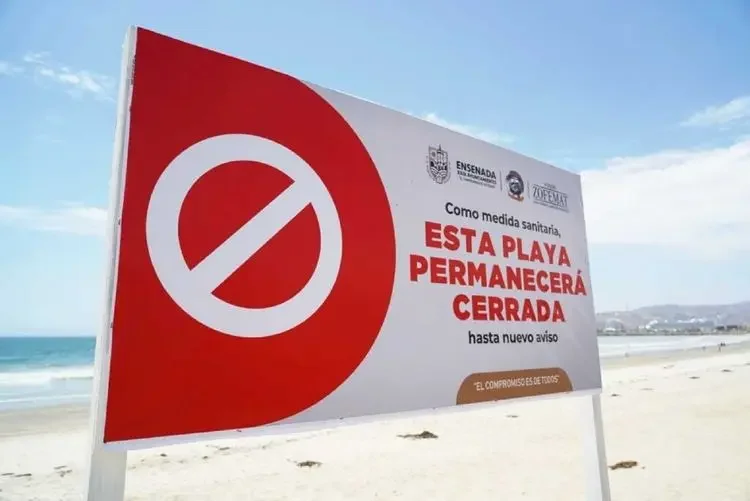
Ensenada beach closed due to pollution from sewage
Following years of grassroots protests, community-driven water monitoring, and formal legal action, Mexico’s federal environmental protection agency, PROFEPA, recently levied multimillion-peso sanctions against the State Public Services Commission of Ensenada (CESPE). The economic penalties follow a federal investigation confirming that state-run utility facilities systematically discharged inadequately treated wastewater directly into local streams, arroyos, coastal estuaries, and the Pacific Ocean. These events spotlighted a long-running regional sanitation battle. Here’s a detailed accounting of the ongoing battle and recent victory.
Part 1 - The Major Players
Part 2 - Timeline of Events
Part 3 - What’s Next?
Part I. The Major Players
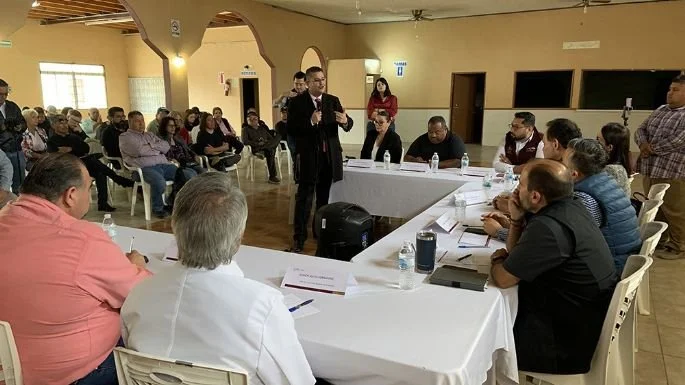
Citizens raising concerns to agencies over wastewater problems. Source: Gringo Gazette May 2024
At the center of ongoing sanitation disputes are the following government regulators, regional water operators, scientists, and local communities grappling with regulatory compliance and continuous contamination.
Government Organizations
CESPE: Comisión Estatal de Servicios Públicos de Ensenada. This is the State Public Services Commission of Ensenada,
CESPE is responsible for supplying, conducting, distributing, and purifying water, and treating wastewater in Ensenada (source here) This agency sits at the center of Ensenada's wastewater crisis. It operates key, overburdened treatment facilities.
CESPE is the local municipal water utility held directly responsible for operating and maintaining Ensenada’s failing treatment infrastructure, including the Maneadero treatment plant.
PROFEPA: Procuraduría Federal de Protección al Ambiente. The federal agency in Mexico that enforces environmental laws.
PROFEPA acts as the federal watchdog and police force for the Ministry of Environment and Natural Resources (SEMARNAT)
PROFEPA inspects, monitors, and penalizes activities that harm nature and wildlife.
PROFEPA acted as an enforcement and regulatory authority in Ensenada's wastewater dispute by inspecting the local treatment plants, levying major financial penalties, and ordering partial temporary shutdowns against state operators like the CESPE for discharging untreated sewage in violation of Mexican environmental standards. (sources here and here).
SEMARNAT: Secretaría de Medio Ambiente y Recursos Naturales The federal cabinet-level ministry of the Mexican government responsible for shaping environmental policy, protecting natural resources, and promoting sustainable development across the country. This federal ministry oversees PROFEPA (above) and CONAGUA (below). (sources XXXX)
COFEPRIS: Comisión Federal para la Protección contra Riesgos Sanitarios). Mexico's federal health and sanitary risk regulatory agency.
In Ensenada's water treatment crises, COFEPRIS acted as the oversight body that tested coastal waters, flagged severe sewage contamination, and declared local beaches unfit for public recreation. (Source here)
SEPROA: Secretaría de Manejo, Saneamiento y Protección del Agua. Baja California’s State Ministry of Water Management,
SEPROA designs water policies, manages regional water resources, and oversees public drinking water, sanitation, and wastewater treatment infrastructure across municipalities like Tijuana, Mexicali, and Ensenada. (source here)
Planned, funded, and coordinated the modernization projects for facilities like El Naranjo beginning in late 2024. (source here)
CONAGUA: Comisión Nacional del Agua (National Water Commission). This is Mexico's federal water authority.
CONAGUA operates as a technical and administrative body under the nation's environment ministry, SEMARNAT.
CONAGUA functioned as the primary regulatory and supervisory body in Ensenada's wastewater management. It oversees federal discharge permits for industrial and municipal operations, conducts technical evaluations for local sanitation and infrastructure projects, and coordinates funding or project implementations to address severe coastal pollution and water scarcity challenges. (source here).
Non-governmental Organizations
CIDECO: Centro de Investigación y Desarrollo Costero. An independent scientific watchdog in Ensenada's wastewater conflict.
Through its "Ensenada MAR Azul" program, CIDECO performs continuous water quality monitoring, pinpoints anthropogenic contamination hotspots like Playa Hermosa, and pressures authorities to formally investigate irregular sewage and pollutant discharges into local coastal ecosystems. [sources here and here)
Todos Somos Maneadero: a local grassroots citizen group and community organization in Maneadero.
The group was formed specifically to advocate for local residents, organize public demonstrations, and pressure authorities to fix failing sewage and sanitation infrastructure.
By utilizing public forums and social media, they serve as a watchdog organization for wastewater treatment, pushing for the complete rehabilitation and transparent oversight of local wastewater treatment plants to protect the local ecosystem and Todos Santos Bay. (Source here)
The group actively monitors and reports illegal or accidental overflows of raw sewage and contaminated wastewater into local arroyos, soil, and groundwater systems by CESPE. (source here)
They met with government officials to report raw sewage discharges, demand the repair of failing local treatment plants, and protest the ongoing contamination of local soil, groundwater, and coastal marine life. (source here)
Academic Institutions
UABC: Universidad Autónoma de Baja California (Autonomous University of Baja California). A major public state university in Mexico with prominent campuses in Ensenada, Tijuana, and Mexicali.
Researchers from UABC and its Instituto de Investigaciones Oceanológicas have historically tested local water and reclaimed wastewater quality, providing independent data to track contamination levels near CESPE infrastructure. (sources here and here)
UABC scientists acted as critical scientific watchdogs and technical advisors. They monitored coastal pollution, documented the failure of municipal treatment systems, and publicly advocated for modernizing infrastructure to resolve Ensenada's wastewater crisis. (Source here)
Activists and citizen groups in petitions targeting CESPE's wastewater management have frequently urged the government to adopt technical strategies recommended by UABC experts. (Source here)
Other Non-governmental Researchers, Monitors, and Anti-pollution Advocates
Binational/Hygenic survey teams: Past microbiological shoreline studies from Tijuana down to Punta Banda involved joint institutional sampling protocols tracking coliforms and enterococci. (source here)
Science for the People: Initiated a community-based, multi-year water quality survey focusing on the Maneadero, Cantu, and Punta Banda areas near Ensenada. (source here)
Ejido Coronel Esteban Cantú: have historically organized protests and raised alarms against local sanitation failures and untreated wastewater discharges that threaten their local environment, marine life, and public health. (sources here and here)
Part 2 - Timeline of Events
Up through 2021: Ensenada’s sanitation infrastructure, once recognized for high wastewater treatment compliance, suffered severe operational degradation over the previous decade. By December 2021, the federal health regulator COFEPRIS designated Playa Hermosa in Ensenada as the most contaminated beach in Mexico. (sources here, here, and here)
Since 2021: Persistent toxic odors and an increase in reported gastrointestinal and respiratory illnesses sparked widespread mobilization. Coastal residents, local business operators, and regional surfing coalitions organized public demonstrations targeting municipal and state water authorities. The contamination inflicted significant economic damage on local hospitality and eco-tourism, driving community action from public protests toward formal legal and scientific intervention. (sources here and here.)
May 15, 2022. A total of 93 people filed a public complaint with the Federal Attorney for PROFEPA against whoever is responsible for the dumping of untreated wastewater on Hermosa Beach. They cited the 2021 COFEPRIS report stating that Hermosa Beach is not suitable for recreational use due to the high level of fecal matter in the water. (sources here and here)
Since 2022: Community groups established independent monitoring networks. Local watchdogs partnered with marine scientists and the Centro de Investigación y Desarrollo Costero (CIDECO), led by Dr. Stephen Martínez Guerrero, to challenge municipal compliance claims. (sources here, here, here, and here.
Concurrently, initiative networks such as Ensenada MAR Azul have implemented permanent water-sampling sites across key coastal zones, including Playa Hermosa and Playa San Miguel. Residents have documented raw sewage discharges through high-definition photography and video, circulating the media on social platforms and regional news outlets to demand regulatory transparency. (Sources here, here, and here)
May 2, 2024. Todos Somos filed official administrative complaints with PROFEPA. This included a petition, and documented evidence detailing illegal raw sewage discharges flowing through the San Carlos and Las Ánimas arroyos, which directly contaminate the Punta Banda Estuary and protected coastal wetlands. The group gathered community water sampling data, resident testimonies, and visual documentation to prove that CESPE’s local treatment facilities (such as the Maneadero plant) were repeatedly discharging wastewater that failed Official Mexican Standards. (source here and here)
By filing through federal channels, Todos Somos bypassed local municipal delays and forced PROFEPA to initiate official regulatory inspections.
June 2024. The citizen filing triggered immediate federal intervention. PROFEPA initiated administrative proceedings and issued partial temporary closures (clausuras parciales temporales) targeting non-compliant discharge points across four wastewater treatment plants in the Ensenada region. Federal inspectors cited missing environmental authorizations, improper metering, and violations of national water quality standard NOM-001-SEMARNAT-2021. (sources here, here, and here)
State water utility representatives (CESPE) subsequently sought to challenge the administrative penalties in federal court through late 2025. However, judicial authorities upheld PROFEPA’s enforcement actions, confirming the agency's jurisdiction and legal procedure.
Late 2024 to Mid 2025. In response to the enforcement measures, the In response to enforcement measures, the Baja California state government (SEPROA) launched infrastructure modernization projects targeting facilities like El Naranjo. Concurrently, CESPE representatives initiated legal appeals in federal court to challenge PROFEPA’s closure orders, administrative fines, and jurisdictional authority over local discharges. (sources here, here, here, here, and here)
Violations persisted as regional water plants across Baja California continued running past legal pollution limits under federal standards (NOM-001-SEMARNAT-2021). State water agencies faced escalating administrative pressure while attempting legal challenges. (source here)
On August 3, 2026, PROFEPA formally issued multimillion-peso fines against state water operators, including CESPE in Ensenada and CESPT in nearby Tijuana, citing continued operations outside federal environmental laws. here
After August 3, 2026: State water director publicly denied validity of fines. (source here)
Part 3 - What’s Next?
Now that PROFEPA has levied fines against CESPE, the legal process moves from simple investigation into enforcement, legal response, and mandatory environmental remediation. (source here)
Legal Options and Administrative Protocols
In the immediate aftermath, CESPE enters a standard window under Mexican administrative law to decide how to address the resolution. The utility can accept the ruling and pay the economic fine, which goes into federal funds. Alternatively, CESPE can challenge the outcome through an administrative appeal with PROFEPA or file a judicial suit in federal court. Crucially, federal regulators emphasize that simply paying the fine does not excuse the utility from fixing the problem—the administrative sanction operates alongside legally binding directives to stop non-compliant discharges and restore damaged areas. (source here)
Mandated Sanitation & Infrastructure Upgrades
To comply with federal water standards (specifically NOM-001-SEMARNAT-2021), CESPE is required to submit and execute a detailed compliance and remediation plan. This forces state and municipal authorities—such as the Baja California Secretariat of Water (SEPROA)—to unlock public funding, including state infrastructure bonds (Bono Verde), to complete physical rehabilitations and expansions at the Maneadero treatment facility. Upgrades must address operational deficiencies, upgrade filtration systems, and regularize environmental impact permits. (sources here and here)
Escalate Sanctions and Public Oversight
Following the penalty, PROFEPA places the facility under an active regulatory watchlist, conducting follow-up inspections to ensure the compliance plan is executed on schedule. If CESPE fails to remedy the discharges, PROFEPA can escalate enforcement to partial or total operational shutdowns, recurring daily fines, or even criminal referrals through the Federal Attorney General's Office (FGR) for environmental crimes. Meanwhile, community advocacy groups (e.g., Todos Somos Maneadero) and local agricultural networks leverage the formal sanction to demand public transparency, monitor progress via public records, and hold state officials accountable to concrete completion dates. (sourcse here and here)