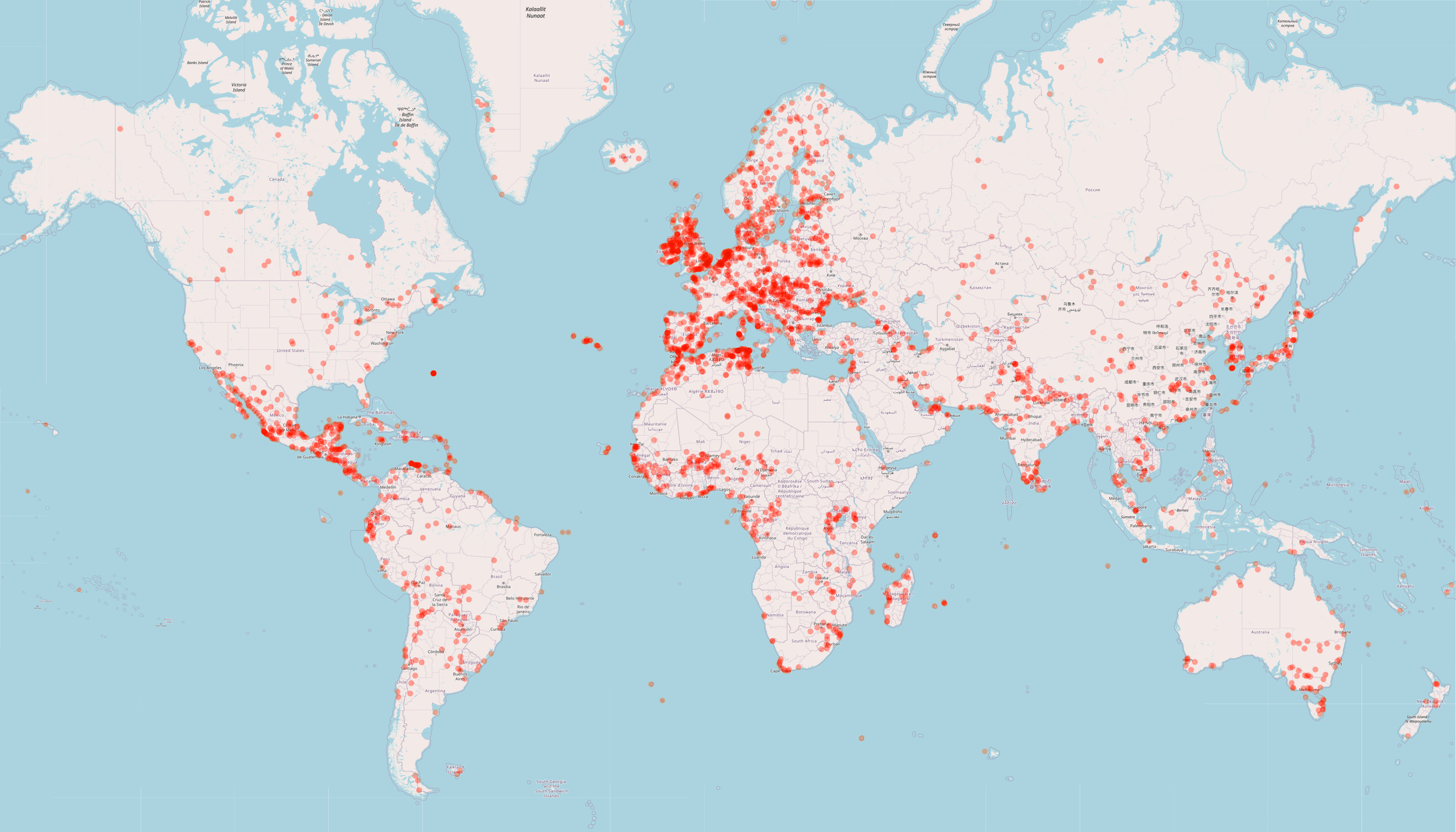
There are over 2,500 Ramsar sites around the world, of which 41 are in the United States and 144 are in Mexico. Seven of these sites are in Baja California.
At a time when headlines about Iran are often focused on war, conflict, and uncertainty, it’s worth remembering that one of the world’s most enduring conservation success stories also began there. In 1971, representatives from nations around the globe gathered in the Iranian city of Ramsar to create an international agreement, the Ramsar Convention on Wetlands, dedicated to the conservation and wise use of wetlands. More than fifty years later, that agreement connects thousands of important wetlands worldwide - including the Punta Banda Estuary.
The Ramsar Convention is an international environmental treaty dedicated to the conservation and sustainable use of global wetlands. Under this treaty, participating nations pledge to maintain the ecological character of Designated Wetlands of International Importance —commonly known as Ramsar Sites—which are recognized for their exceptional biodiversity, rarity, or hydrological significance. By designating a site on the Ramsar List, a country agrees to promote the site’s conservation and “wise use” while maintaining the ecological character that made it important in the first place. The Punta Banda Estuary was added to the Ramsar List in 1971.
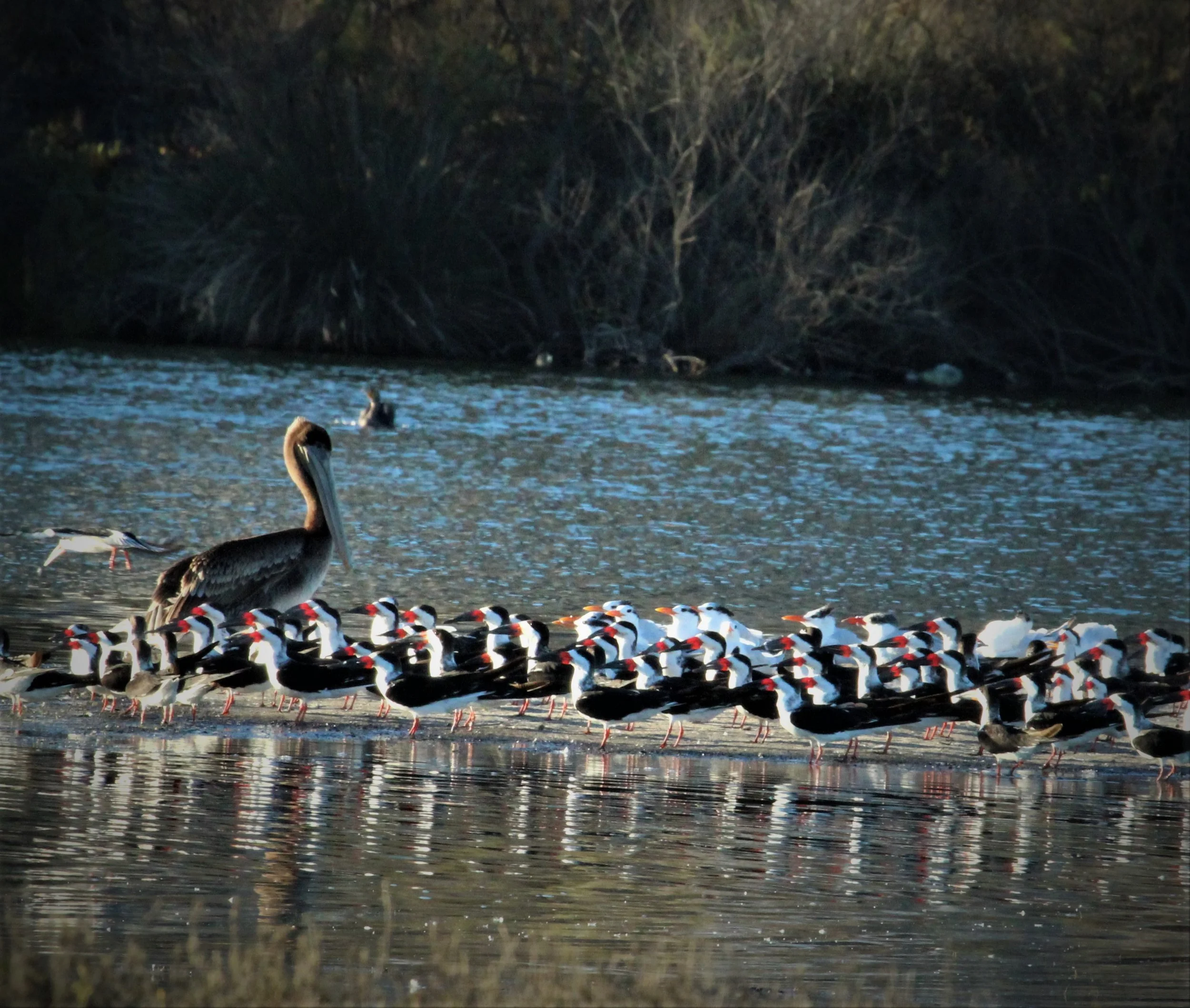
California Brown Pelican and a flock of Black Skimmers at the Punta Banda estuary.
One common misconception among those who have heard about Ramsar sites is that Ramsar designation automatically creates a nature preserve or prohibits all development. It does not. The Ramsar Convention is not an environmental police force, nor does it directly impose local land-use regulations. Instead, it is an international commitment made by national governments. Countries that join the convention agree to consider the conservation of designated wetlands in their planning and management and to cooperate internationally in protecting these valuable ecosystems.
So if Ramsar status does not automatically create legal protections, what does it accomplish?
First, it brings recognition. A Ramsar designation signals that a wetland is important not only to a local community but also to the international community. That recognition can help attract scientific attention, conservation funding, educational programs, restoration projects. and public awareness. It can also encourage government agencies to consider the wetland’s value when making decisions that affect it.
Second, Ramsar designation creates accountability. Countries that place wetlands on the Ramsar List are expected to monitor their condition and work toward maintaining their ecological character. If the site is being degraded, the convention provides a framework for drawing attention to those concerns and encouraging corrective actions.
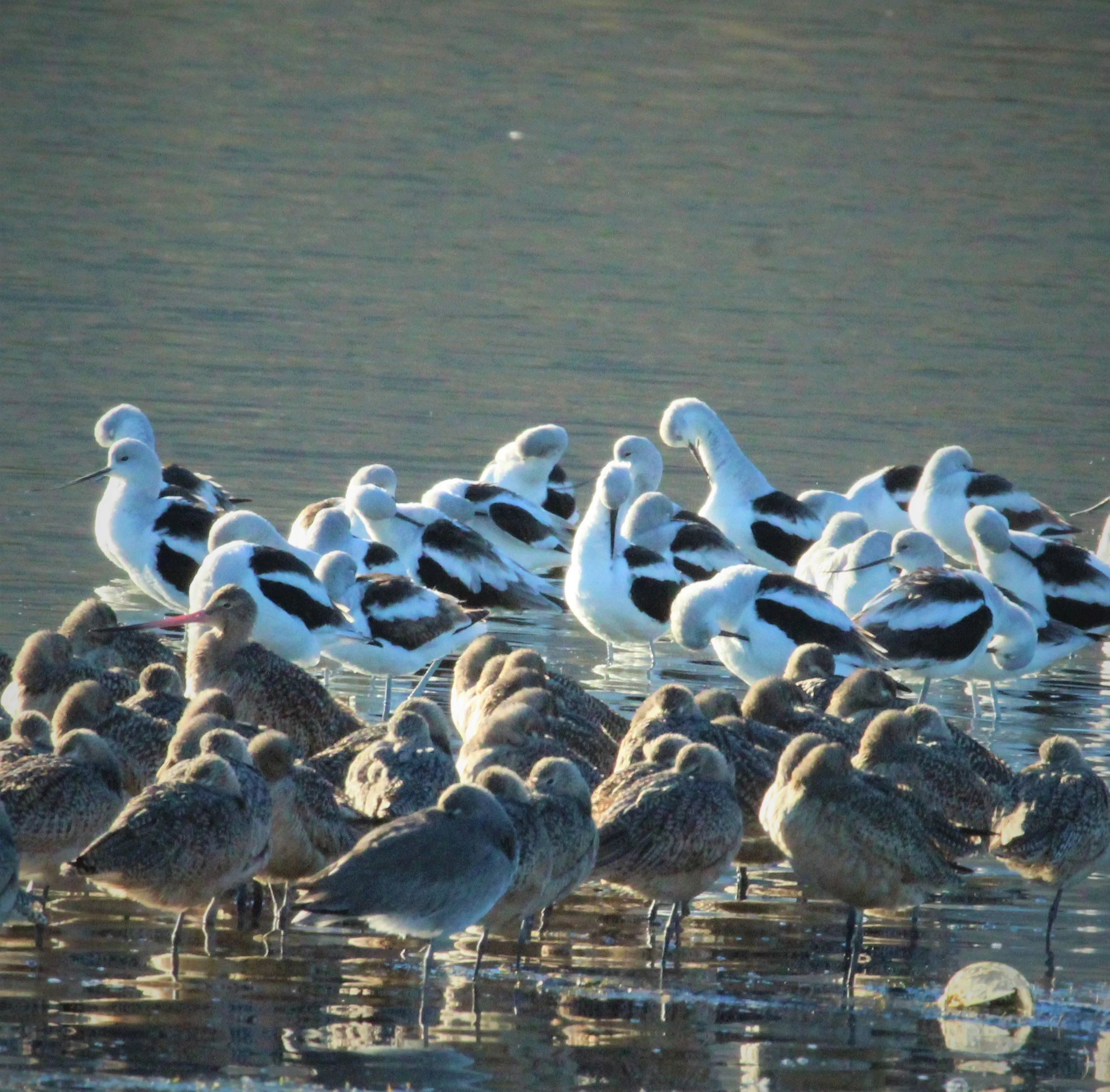
American Avocets and Marbled Godwits relaxing at a sheltered location in the estuary.
For Punta Banda, the designation serves as a reminder that the estuary is part of a much larger story. It is one of thousands of wetlands worldwide that have been recognized because they provide benefits to both wildlife and people.
The Ramsar Convention is built on the idea of “wise use.” Rather than locking people out of the wetlands, it seeks to encourage sustainable management so that wetlands can continue providing benefits for future generations. In that sense, Ramsar is less about creating strict preservation areas and more about recognizing that healthy wetlands have value - and that once they are lost, they are extremely difficult to replace.
Ultimately, the Punta Banda Estuary’s Ramsar designation reflects a commitment made by Mexico under an international conservation agreement. By joining the Ramsar Convention and designating sites such as Punta Banda, Mexico has agreed to promote the conservation and wise use of these wetlands, to consider their importance in environmental planning, and to work toward maintaining the ecological character that makes them valuable. While Ramsar status does not automatically create a protected area or prohibit all development, it represents a recognition that these places deserve special attention and steward ship. More than a title, the designation is a reminder that wetlands such a Punta Banda are part of a global natural heritage. Through the Ramsar Convention, Mexico has joined other nations in acknowledging that these ecosystems provide lasting benefits to both people and nature, and that their conservation is a responsibility shared across generations.
-by El Berryman