The Sacred and Vulnerable White Sage
by Cindy Berryman
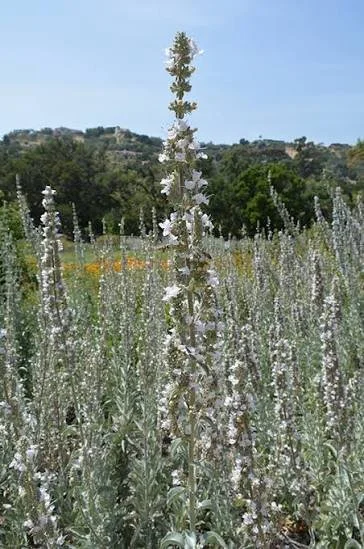
White Sage in bloom
If you hike the coastal sage scrub and chaparral-covered foothills of Southern California or northern Baja you might encounter one of our most sacred plants, Salvia apiana, commonly known as white sage. During the warm days of spring and summer the fragrance of the aromatic evergreen perennial shrub fills the air, sweetly pungent and earthy. You come home from your hike with the scent heavy on your skin and clothes where it will linger for hours before evaporating or being washed off.
As a cornerstone species in the coastal sage scrub ecosystem, white sage is a critical seasonal food source for native bees—such as carpenter and bumblebees—due to its late-spring bloom and unique lever-like stamen mechanism. Small mammals and birds also rely on it for cover, nesting, and food.
The volatile oils that give sages and other plants of the coastal sage scrub their heavy aroma are responsible both for the plants’ survival and for their sacred place in native American culture. Unfortunately, those oils could before long also be responsible for the extinction of Salvia apiana if current harvesting practices do not change.
Before we look at the taxonomy and habitat of Salvia apiana, here are a few words on why it is important to understand the plant’s place in indigenous culture and to help ensure the survival of this important plant species.
Its Sacred Value to Indigenous People
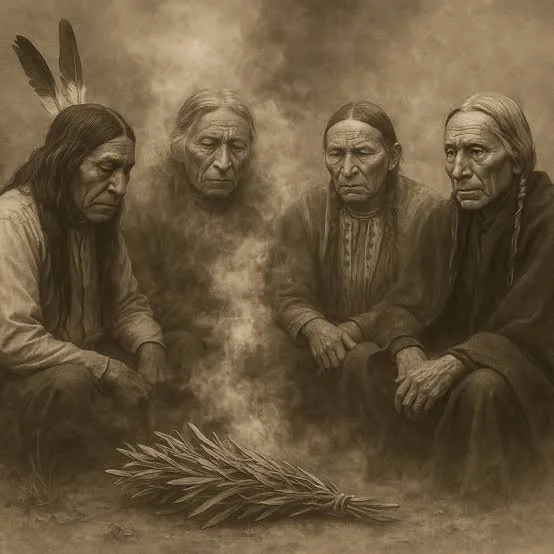
Sourced 9/16/2026 (https://www.facebook.com/groups/633702277894968/posts/1425010892097432/)
For thousands of generations, white sage has held a sacred role in the spiritual, cultural, and medicinal lives of the Cahuilla, Chumash, Kumeyaay, and other indigenous peoples of Southern California and northern Baja. Far beyond just a plant, white sage is regarded as a living being and a powerful spiritual healer. Traditionally, indigenous communities harvest the plant with deep reverence, offering prayers of gratitude before taking only what is needed and thus ensuring the health of the plant and species.
Medicinally, indigenous people brew the leaves into teas or prepare as poultices to treat respiratory ailments, colds, sinus infections, and women's health issues following childbirth. Spiritually, it is used for its cleansing properties. Burning the dried leaves produces a fragrant smoke that is used in ceremonies to clear negative energies, restore balance, and pray for physical and spiritual healing. This practice of smoke cleansing is a sacred ritual tightly integrated into rites of passage, community gatherings, and individual prayer. xx
So Much has Been Taken
Sadly, in recent years the global new age and wellness communities have appropriated this sacred indigenous practice without understanding the harm they are doing to both the survival of the plant and the indigenous communities themselves. Ethnobotanist and Chumash descendant Rose Ramirez tells of visiting the Etiwanda Nature Preserve in Rancho Cucamonga 15 years ago and seeing white sage stands that “seemed to go on for miles.” Visiting the preserve again in recent years, she laments that “no longer were there beautiful sage blossoms as far as I could see, but shrunken sage, struggling to survive.” The illegal harvesting of white sage, she says, “is killing what remains of one of California Indians’ most sacred plants.” (Ramirez and Small 2020)
So much has been taken from indigenous people of the Americas. Will we finally take this from them too?
Poached Sage cannot Give Blessing
“The stress and harm done to grandmother white sage when she is poached is so stressful to the plant that it can no longer give blessing. Ethical gathering should only be done to a sage plant that has been loved and tended to, and should NEVER kill the plant. Sage poaching does both of these things.” -- Gabrieleno Tongva Tribal Council
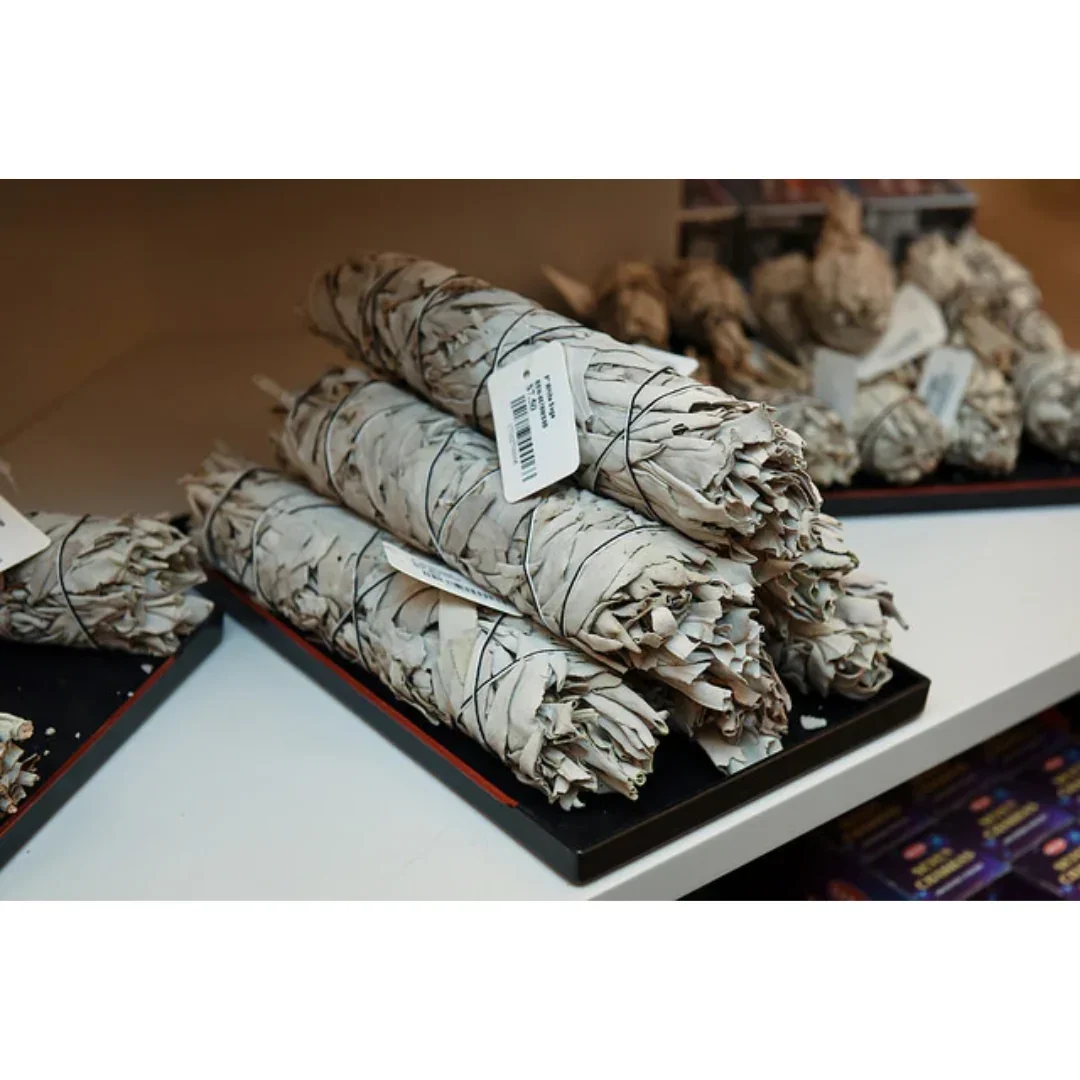
This species is threatened by widespread harvesting to prepare smudge sticks for popularized ceremonial purposes.
White sage only grows in coastal areas from Santa Barbara, California to northern and middle Baja California, Mexico. It doesn’t grow anywhere else in the world. It requires the specific climate and soil of coastal sage scrub habitat, yet such a narrow distribution cannot sustain current demand outside indigenous communities. This has led to over-harvesting and illegal poaching on tribal lands and public preserves. The rampant over-exploitation has created a profound crisis for Native communities. Not only does commercial poaching disrespect sacred traditions, but it also threatens the ecological survival of Salvia apiana, reducing a sacred relative and ceremonial cornerstone into an industrialized consumer product.
“We’re encouraging everyone to purchase white sage only from reputable growers, regenerative farms, and native plant nurseries, and to boycott all products made from wild gathered (poached) sage.” -- California Native Plant Society (Small and Ramirez 2022)
Sage Advice
In response to these pressures, Indigenous activists, cultural practitioners, and environmentalists have launched robust educational campaigns to protect white sage. They advocate for ethical consumerism, urging non-Native people to understand the sacred significance of the plant and to seek culturally appropriate alternatives, such as juniper, sweetgrass, or locally grown garden herbs, if they wish to practice smoke cleansing.
Unlicensed harvesting rings strip public lands, state parks, and tribal reservations, often pulling up whole shrubs by the roots. This unregulated extraction causes severe habitat destruction, ruins natural regeneration, and increases the chaparral's vulnerability to climate change and wildfires. Furthermore, the decline of white sage stands deprives native pollinators and dependent wildlife of a vital seasonal resource.
Ultimately, sacred plants cannot be separated from the communities who protected them since time immemorial. True respect for white sage requires honoring not just the smoke it produces, but the sovereignty, traditions, and ecological wisdom of the Native peoples who have sustained it for millennia.
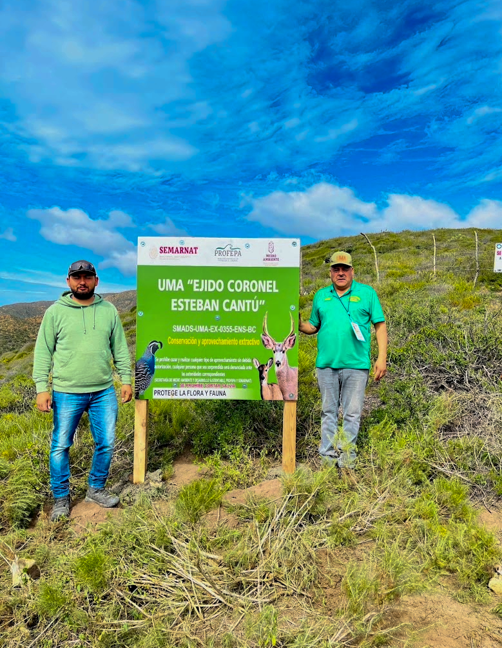
The UMA "Ejido Colonel Esteban Cantu" was formed about 7 years ago. It is led by Luis Serrano with about 20 other Cantu residents assisting. Signs and locked gates limit access to prevent wildlife and plant poaching. Luis and others patrol regularly to protect the natural resources on the lands. Hunting and gathering permits are sold to pay for the program and raise continuing revenue for the Ejido. The sage harvest is limited to a sustainable amount as determined based careful surveys of the UMA.
Ejido Esteban Cantu Manages Sage on their UMA Lands
The Ejido Coronel Esteban Cantú on the Punta Banda peninsula operates a community-led resource conservation initiative under Mexico’s official Wildlife Management Unit (UMA) framework. A major focus of environmental management within this region involves the protection, monitoring, and sustainable exploitation of native flora—most notably white sage. Any legal transport or sale of white sage harvested from Ejido Esteban Cantú requires an official guía forestal (forestry transport permit) or documentation issued explicitly under the approved UMA management plan.
AN UMA management plan outlines sustainable harvesting practices for white sage. These practices may include pruning vs. uprooting, limiting pruning per plant, avoiding the flowering season, and harvesting during the most favorable climate conditions. Harvest limits are set based on the abundance of white sage in the management unit.
Ensure your Sage Sticks are Ethically and Legally Sources
Protecting Salvia apiana requires a shift in sourcing practices:
Buy Indigenous or from Permitted Source. Purchase directly from Indigenous-owned and operated businesses to ensure economic benefits return to communities with ancestral ties to the plant. Alternatively, purchase sage legally harvested from areas where the plant is carefully managed (such as Ejido Esteban Cantu). If you are looking to purchase sage originating from the Punta Banda region, always ask to view the supplier's valid SEMARNAT UMA registration and official harvest authorization codes. Material sold without these documents is highly likely to be poached.
Grow Your Own: Propagate Salvia apiana at home in suitable Mediterranean or arid climates.
Explore Alternatives: Use abundant, fast-growing, and culturally appropriate alternatives for smoke cleansing, such as Garden Sage (Salvia officinalis), Lavender, Yerba Santa, or Rosemary (Salvia rosmarinus).
How to Recognize White Sage
White sage (Salvia apiana) belongs to the mint family (Lamiaceae) and the genus Salvia, which derives from the Latin salvere ("to save" or "to heal"). Native to Mediterranean climates in Southern California and Baja California, it is an evergreen perennial shrub growing 3 to 5 feet tall.
Its striking silvery-white appearance comes from dense, woolly hairs that reflect intense sunlight and reduce moisture loss. The thick, leathery leaves release a camphoraceous aroma when crushed. In spring, it produces tall flower stalks bearing pale, creamy-white blossoms.
Salvia apiana sits at a critical crossroads of ecology, culture, and modern consumerism. By recognizing its ecological vulnerability, supporting indigenous sovereignty, refusing poached plant material, and embracing cultivated alternatives, we can ensure that white sage continues to thrive on our hillsides and honor its original caretakers for generations to come.